Every brand wants to be remembered, trusted, and chosen. But how do some brands manage to stay clear, consistent, and compelling across every channel while others get lost in the noise? The answer often lies in a single strategic foundation, a brand platform.
So, what is a brand platform? It is more than just a document. It is the internal guidebook that defines who your brand is, what it stands for, and how it should show up in the world. A strong brand platform brings clarity to your purpose, voice, visuals, and values. It helps your team stay aligned and ensures your message feels the same whether someone visits your website, reads your packaging, or engages with your brand on social media.
Brands that invest in building a solid brand platform are better equipped to adapt, scale, and connect with their audience in meaningful ways. Without it, even the most eye catching campaigns can fall flat. A brand platform is not just about marketing, it is a critical part of your overall brand strategy.
In this guide, we’ll walk through everything you need to know about crafting a powerful brand platform document, from defining your brand purpose and values to nailing your brand positioning. Whether you’re starting from scratch or refreshing an existing foundation, you’ll learn how to build a brand platform that supports long term success and brand consistency.
Ready to build a brand that truly stands for something? Let’s get started.
The Core Definition of a Brand Platform
A brand platform is the foundation every successful brand needs. It brings together the most important elements that define who you are, what you stand for, and how you communicate with the world. Unlike a tagline or campaign slogan, a comprehensive brand platform sits behind the scenes, shaping every customer interaction and guiding every internal decision.
At its heart, a brand platform includes your brand identity, your brand personality, your brand promise, and your brand positioning. Together, these create a framework that helps your team communicate clearly and consistently while building lasting emotional connections with your target audience.
Think of it as the blueprint for your brand’s behavior and expression. A solid brand platform goes beyond design and logos. It ensures that every message you share, every campaign you launch, and every product you build reflects your deeper purpose and brand value.
What makes successful brand platforms so powerful is their ability to bring focus. They align your business goals with customer needs and provide clear direction when things get complex. With a strong foundation, your brand can grow with confidence while staying true to what matters most.
Key Elements of a Comprehensive Brand Platform

To build a brand that stands the test of time, you need more than just great design or catchy messaging. You need a framework that brings together your purpose, personality, values, and vision. That’s where a comprehensive brand platform comes in.
Below are the essential elements that make up a complete and powerful brand platform, each playing a unique role in shaping your brand experience and internal direction.
Brand Purpose and Brand Vision
Your brand purpose is the reason you exist beyond making money. It answers the question, “What change are we here to make?” Your brand vision, on the other hand, paints a picture of where you are headed. These two elements guide long-term thinking and connect your internal team to a deeper mission.
Core Values
Your core values are non-negotiable principles that shape how your brand behaves. They influence company culture, decision-making, and how you are perceived by the world. Values like honesty, innovation, or sustainability should not just be listed – they must be lived.
Brand Positioning
Brand positioning defines the unique space you want to own in your customer’s mind. It clarifies what you do, who you serve, and why you are different. Strong positioning allows your team to deliver messaging that reinforces your distinct value rather than blending into the competition.
Target Audience
You cannot build a relevant brand without knowing who you are speaking to. Defining your target audience means understanding their needs, behaviors, aspirations, and pain points. This helps you develop tailored messaging, products, and campaigns that truly connect.
Brand Personality and Brand Promise
Your brand personality is how your brand would behave if it were a person. Is it playful, trustworthy, bold, or refined? This personality influences your tone of voice, imagery, and experience.
Your brand promise is the commitment you make to your audience. It sets expectations and tells people what they can count on every time they engage with you.
Visual Identity
Your visual identity includes your logo, color palette, typography, and design system. These are not just aesthetic choices. When applied consistently, they make your brand recognizable and trusted. Great visuals reflect your personality and values without saying a word.
Each of these pieces contributes to a good brand platform document that supports growth, consistency, and connection. When defined and used together, they give your brand a stable foundation that supports creative freedom without losing focus.
How a Brand Platform Supports Business Strategy
A well-crafted brand platform is not just a branding tool. It is a key driver of overall business success. When rooted in strategy, it supports everything from internal decision-making to customer experience. A strong brand platform brings clarity, focus, and momentum to every part of the business.
Faster and Smarter Decision-Making
With a clear platform in place, your team does not have to guess what the brand stands for or how to respond. From product choices to marketing campaigns, the platform acts as a built-in filter. It helps you say yes to the right opportunities and confidently say no to what does not align.
Alignment Across Teams
Many businesses struggle because their teams are not working from the same playbook. A good brand platform document creates a shared understanding of your core values, brand vision, and brand positioning. Everyone from design to sales works with the same goals in mind, which improves communication and collaboration.
Stronger External Presence
When your messaging, tone, and visuals all reflect the same identity, people begin to recognize and trust your brand. A recognizable brand is not built overnight. It is shaped by years of consistency and intentional communication; all guided by the brand platform.
Support for Long-Term Planning
Your brand strategy is not complete without a stable foundation to support future growth. A solid brand platform makes sure your brand stays relevant as markets shift. It provides the structure to evolve without losing your core essence.
Real-World Brand Platform Examples
The most effective brand platforms do more than sit inside a brand guideline PDF. They shape decisions, unify voices, and build value over time. Behind every globally respected brand is a clear and strategic platform that defines how the brand behaves, speaks, and grows.
Let’s look at how three valuable brands have built strong foundations using brand platforms to guide everything from marketing campaigns to product development and team culture.
Uber: One Brand, Many Experiences
Uber’s brand platform connects multiple services like Rides, Uber Eats, and Freight under one unified identity. Whether you are ordering lunch or moving a shipment, the experience feels like it is coming from the same brand.
Their platform defines how the brand communicates, sets expectations for service, and aligns all departments. From design to support, the brand behaves with a consistent tone and personality. Uber’s creative team built a system where brand managers, product leads, and regional marketers all work from a shared foundation.
TikTok: A Platform as Fast as Its Audience
TikTok’s identity is driven by speed, spontaneity, and creativity. The platform reflects that energy at every touchpoint. Their brand messaging is fun and approachable, with a tone that connects deeply with creators and users.
By building a clear system of brand assets, messaging rules, and visual patterns, TikTok ensures internal teams and external partners are aligned. Their platform also evolves rapidly by staying close to market trends and feedback, showing how an effective brand platform can flex without breaking.
Bang & Olufsen: Where Form Meets Emotion
Bang & Olufsen’s brand platform centers around precision, beauty, and emotion. It draws from a clear mission statementand expresses a distinct brand story about craftsmanship and heritage. Every touchpoint, from website to packaging, reflects the brand’s values.
The platform influences both brand messaging and product experience. The result is a cohesive identity that feels elevated and timeless. Their platform guides branding objectives, connects with their target audience, and reflects a brand’s culture rooted in design excellence.
These examples show that creating a brand platform is not just about writing a marketing document. It is about creating a brand with meaning, direction, and consistency. These companies combine market research, mission statements, and a strong positioning statement into platforms that evolve with time but never lose their essence.
They are not just organized. They are strategic. And they show how smart planning early in your branding journey can lead to lasting impact.
How to Build Your Own Brand Platform from Scratch
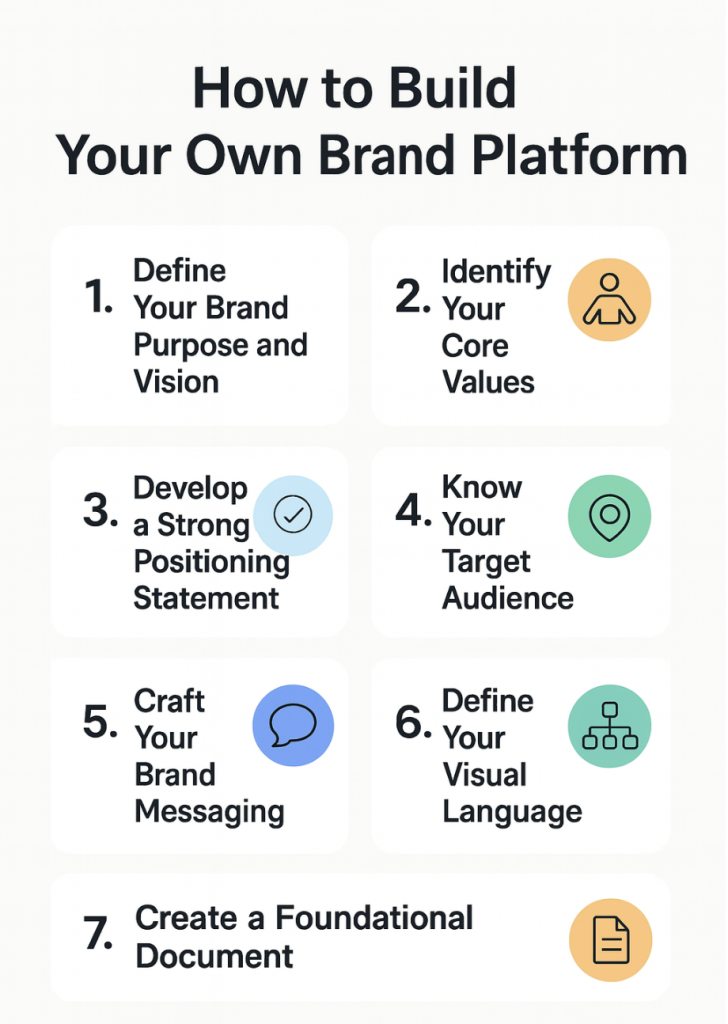
Creating a strong brand does not begin with design or advertising. It starts with a clear, strategic foundation. A brand platform brings structure and meaning to your organization’s identity. It connects your values to your voice, and your products to your purpose.
Whether you are building a new business or rethinking an established brand, here is a step-by-step guide to help you build a platform that supports long term success.
Step 1: Define Your Brand Purpose and Vision Statement
Start by understanding why your business exists beyond making money. What problem do you solve for your customers? What greater purpose drives your work?
Your vision statement paints the future you are working toward. It provides direction for your brand’s actions and inspires your team to work with purpose. A strong vision is memorable, inspiring, and deeply tied to your values.
Step 2: Identify Your Core Values and Personality Traits
Your core values guide every decision your business makes. They influence how your brand behaves internally and how it is perceived externally. These should be more than words. They must be lived.
Pair your values with a few clear personality traits that describe how your brand would act if it were a person. This helps bring human qualities into your external communications and sets the tone for how your brand engages with the world.
Step 3: Develop a Strong Positioning Statement
A positioning statement defines your place in the market. It explains what you do, who you do it for, and how you do it differently. This is not just a marketing exercise. It shapes your business model and how your brand lives in your customers minds.
Use this format to start:
We are [brand] for [target audience] who want [benefit]. Unlike [competition], we [competitive advantages].
This statement gives you a clear position in your category and helps you create marketing that highlights your unique strengths.
Step 4: Know Your Target Audience and Customer Base
Understand who you are speaking to. A clear understanding of your target audience helps shape the tone, content, and visuals of your brand. Dig into their motivations, needs, and behaviors. Use market research to build profiles that reflect your real customer base.
When your brand speaks directly to your audience’s goals and emotions, it builds a strong emotional connection that leads to loyalty and advocacy.
Step 5: Craft Your Brand Messaging and Elevator Pitch
Your brand messaging turns big ideas into actionable content. Create a simple elevator pitch that anyone in your team can use to explain the brand in thirty seconds or less.
Build out messages for different audiences and platforms. Be consistent while staying flexible. The goal is to send a clear message that always ties back to your values and promise.
Step 6: Define Your Visual Language
Your visual language includes logos, colors, fonts, and imagery. It brings your brand to life without needing words. It should reflect your values and personality while being versatile across print, digital, and product spaces.
Provide detailed guidelines to make sure your team uses these elements consistently. This consistency builds a strong identity over time and increases recognition with customers.
Step 7: Create a Foundational Document
Bring everything together in one place. Your foundational document should include your vision statement, core values, positioning statement, brand messaging, visual language, and tone of voice. It should also include your branding objectives and key references for marketing and creating products.
This document provides critical information for anyone who works on or with your brand. It creates a shared understanding that drives smart decisions and keeps your team aligned.
Signs You Need to Refresh Your Brand Platform
Even the most well-defined brand platform can become outdated over time. As your business evolves, your audience grows, and new competitors enter the market, it is important to pause and ask: does your current platform still reflect who you are and where you are going?
A strong brand platform should feel relevant and useful across your organization. If it starts to feel limiting, confusing, or disconnected from reality, it may be time to revisit your foundation.
Here are some clear signs that your brand platform needs a refresh.
Your Brand Messaging Is Inconsistent
If your tone, visuals, or language varies across departments or channels, it usually means your team lacks a shared reference point. A strong brand platform document brings consistency to how your brand sounds, looks, and communicates. Without it, confusion spreads fast.
Your Marketing Strategies Feel Misaligned
When your marketing strategies no longer reflect your brand’s true value or mission, it is a signal that your platform needs an update. Messaging should match your purpose and positioning. If campaigns feel scattered or off-brand, it is time to go back to the foundation.
You Are Competing Only on Price or Features
If your sales conversations always focus on discounts or features rather than value and emotion, it means your brand strategy is missing something. A strong brand platform allows you to lead with your purpose and promise, not just your product specs.
Your Internal Teams Are Not Aligned
Do different teams describe your brand in different ways? Do they struggle to explain your mission or target audience? That disconnect often points to a missing or outdated brand platform document. When updated, the platform helps teams collaborate, communicate, and create with confidence.
You Are Entering a New Market or Scaling Rapidly
Growth brings new audiences, products, and challenges. Before expanding, make sure your brand platform is strong enough to support that growth. It should guide how your brand strategy adapts without losing focus or consistency.
Conclusion: Build a Brand Platform That Drives Lasting Impact
A strong brand platform is more than just a helpful document. It is the core of your brand’s success. When your brand strategy is built on a clear foundation of purpose, values, voice, and positioning, every part of your business benefits, from internal alignment to external recognition.
A well-defined brand platform document helps you create more focused marketing strategies, deliver consistent brand messaging, and build deeper connections with your customers. It brings structure to your team and clarity to your brand.
If you are serious about creating a strong foundation for long term brand growth, Brandy is the perfect place to start. You can easily create, organize, and manage your complete brand platform – values, visuals, tone, and more – all in one centralized space.
Ready to build a brand that grows with clarity and confidence? Start your free Brandy workspace today at brandyhq.com.