So, you are working on a new brand or refreshing an old one. You need that perfect phrase to capture attention, stir emotion, and stay in people’s minds. But now you are asking yourself: should it be a tagline or a slogan?
They both sound catchy. They both seem important. Some people even use them interchangeably. But the truth is, they are not the same. Each plays a different role in your brand’s journey. One lives at the core of your identity. The other fuels your campaigns.
Understanding the difference between a tagline and a slogan can help you make smarter branding decisions. It can also help you connect better with your audience, whether you are just starting out or scaling your brand voice.
In this guide, we will break down what each term really means, how they are used, when to create them, and how they can evolve over time. We will also share real-world examples and tips to help you craft a phrase that truly speaks for your brand.
Let’s clear the confusion once and for all.
What Is a Tagline? A Branding Essential
A tagline is more than just a clever phrase. It is a foundational piece of your brand identity. Think of it as the anchor that holds your brand’s message together. While it may only be a few words long, the impact of a well-crafted tagline can last for years.
At its core, a tagline is a short and memorable statement that captures the essence of your brand. It reflects what you stand for and what makes you different. It is often developed during the early stages of your brand strategy and stays consistent over time.
A tagline helps people remember your brand by tying your name to a specific value, belief, or feeling. When someone hears your tagline, it should spark a connection to what your brand offers and why it matters.
Some taglines focus on product benefits while others highlight emotional value. The best ones are timeless. For example, “Think Different” instantly brings Apple to mind. “The Ultimate Driving Machine” reminds you of BMW’s promise of performance and precision. These taglines do not change from one campaign to another. They stay with the brand and grow with it.
Taglines are used everywhere. From your website header to your business card, from your packaging to your social media bios. They are often the first impression and the lasting one too.
Up next, let’s explore the other side of the coin – what exactly is a slogan?
What Is a Slogan? The Voice of a Campaign
A slogan is a powerful tool used in marketing to capture attention quickly. While a tagline defines the brand, a slogan is more flexible. It speaks directly to a campaign, a product, or a specific message you want to promote in a given moment.
Slogans are designed to be catchy and memorable. They highlight features, benefits, or emotional appeals that connect with your audience. Unlike taglines, which remain steady, slogans can change from one marketing campaign to the next. They are often short term and created with specific goals in mind.
For example, when Apple launched the first iPod, the slogan was “A thousand songs in your pocket.” It focused on the unique benefit of the product in a simple and relatable way. That phrase became an instant hit, helping people understand exactly what made the iPod special.
Slogans often support a product launch, a seasonal sale, or a brand initiative. They can help shape how people view a brand during that period. Some slogans are so successful that they stick around long after the campaign is over.
Think of a slogan as your brand’s voice during a conversation. It tells your audience what they need to know right now. It makes the message more engaging, emotional, or action oriented. And it helps people remember what you are offering and why they should care.
Now that we have defined both, let us look at how taglines and slogans compare side by side.
Tagline vs Slogan: Key Differences You Should Know
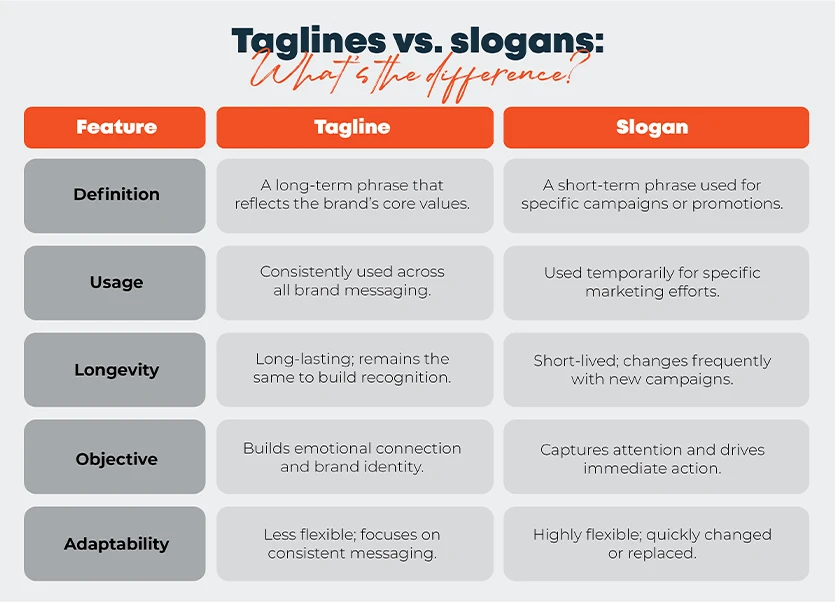
At first glance, taglines and slogans might seem like two sides of the same coin. They are both short phrases. They are both meant to be memorable. But when you look closely, their purpose and function reveal clear differences.
Understanding when and how to use each can help your brand speak with clarity and consistency. Let’s break it down.
Purpose and Focus
A tagline is built to represent your brand as a whole. It supports your long-term positioning and identity. It tells people what you stand for.
A slogan is more campaign driven. It focuses on a specific product, service, or promotion. It tells people what you are offering at a particular moment.
Longevity and Use
Taglines are meant to last. They remain unchanged for years and are used across all brand touchpoints. Their job is to build recognition and association over time.
Slogans are more flexible. They often change from one campaign to another. They are designed to spark immediate interest and drive action.
Placement and Visibility
You will find taglines in places like websites, packaging, email footers, or social media bios. They are part of the brand’s identity system.
Slogans appear in advertising campaigns, product launches, or promotional content. They show up in banners, commercials, and sales emails.
Creation and Ownership
Taglines are usually crafted by brand strategists or creative directors during the early stages of brand building. They are aligned with brand values and messaging.
Slogans are typically created by marketing teams or copywriters as part of campaign planning. Their goal is to drive results and conversions.
Tone and Flexibility
Taglines lean toward serious, bold, or value based tones. They support long-term vision.
Slogans often have more personality. They can be playful, urgent, emotional, or humorous depending on the campaign goal.
Quick Summary: Tagline vs Slogan at a Glance
| Aspect | Tagline | Slogan |
| Purpose | Represents the brand | Promotes a campaign or product |
| Timeline | Long term | Short term |
| Focus | Brand identity | Product or campaign message |
| Consistency | Stays the same | Changes with campaigns |
| Created By | Brand strategist | Marketing or advertising team |
How and When Taglines Are Created
Taglines are not created on a whim. They are the result of deep thinking during the early stages of brand development. A tagline is born when a brand is being positioned in the market. It captures what makes the brand unique and why people should remember it.
Usually, brand strategists work closely with copywriters to craft a tagline that aligns with the brand’s mission, vision, and values. This happens before launching the brand or during a rebranding phase. The focus is always on long-term impact.
A good tagline speaks to the heart of what your brand is about. It reflects your purpose. It helps your audience remember not just your name but also the feeling or belief you stand for. This is why taglines are not rushed. They are tested and refined to ensure they truly represent the brand.
If your brand is just starting out, investing time and thought into your tagline can help you build strong recognition from day one.
How and When Slogans Are Created
Slogans come to life during the planning stage of a marketing campaign. They are usually created by marketing teams and copywriters who understand both the product and the audience. Unlike taglines, slogans are short term and built around specific goals.
A slogan is created when a brand wants to promote a product, launch a service, or run a seasonal campaign. It is written to grab attention, spark emotion, and drive action in the moment. Because of this, slogans often focus on features, benefits, or emotional triggers.
The process of developing a slogan is more flexible than that of a tagline. Marketers may test different phrases, adjust based on audience feedback, and even run multiple slogans for different regions or platforms.
What makes a slogan successful is its ability to deliver a clear message quickly. It should be easy to remember and make people feel something about what is being offered. A strong slogan can boost a campaign’s visibility and stick in people’s minds long after the campaign ends.
Can a Slogan Become a Tagline? Yes, and Here’s How
Sometimes, a slogan does more than just boost a campaign. It captures the hearts of customers and becomes deeply tied to the brand itself. When this happens, a slogan can evolve into a tagline and take on a more permanent role in the brand’s identity.
This usually happens when a slogan is used in a highly successful marketing campaign. If the audience begins to associate the brand with that phrase more than the original tagline, the company may choose to make the switch. It is not just about popularity. It is about connection and long-term meaning.
A great example is Nike’s “Just Do It.” What started as a campaign slogan in 1987 quickly became the brand’s core message. It spoke to people’s ambitions and personal drive, and over time, it became Nike’s defining statement.
Another example is McDonald’s with “I’m Lovin’ It.” Originally created for an ad campaign, it resonated so strongly with customers that it became the brand’s official tagline across the globe.
These cases show how audience response can shape a brand’s evolution. If a slogan communicates the brand’s purpose better than its existing tagline, and if it gains wide recognition, it can naturally take its place.
Examples of Slogans That Became Iconic Taglines
Some of the most well-known taglines in the world did not begin that way. They started as slogans crafted for individual campaigns. But their power and popularity made them unforgettable. Over time, they became the lasting voice of the brand.
Let’s look at a few examples that show how a slogan can grow into something bigger.
Nike – Just Do It
Launched in 1987, this phrase was part of a campaign that encouraged people of all ages and fitness levels to get active. It quickly became more than just a motivational line. It turned into a symbol of empowerment and perseverance. Today, “Just Do It” is Nike’s core identity.
McDonald’s – I’m Lovin’ It
First introduced in 2003, this slogan was created for a global campaign. The upbeat tone and universal message helped it catch on quickly. Its popularity turned it into McDonald’s tagline, recognized around the world.
Apple – Think Different
This slogan was born during Apple’s 1997 campaign to relaunch its brand. It honored creative thinkers and innovators, setting Apple apart from competitors. Its emotional pull and bold message earned it a permanent spot as Apple’s most famous tagline.
Mastercard – Priceless
Mastercard introduced this line in 1997 as part of a campaign focused on life’s moments that money cannot buy. It struck a chord with audiences and became the brand’s lasting promise.
Avis – We Try Harder
This slogan emerged in 1962 when Avis was trying to gain attention as the second biggest car rental brand. The honest message resonated with customers and became part of its long-term brand story.
These examples prove that when a slogan perfectly captures a brand’s message and earns the love of its audience, it can rise to a higher role.
Tips for Creating a Powerful Tagline or Slogan
Whether you are building a new brand or planning your next marketing campaign, the words you choose matter. A strong tagline or slogan can help people remember you, trust you, and feel something about what you offer.
Here are some practical tips to help you craft phrases that connect with your audience and support your brand goals.
Keep it short and simple
The best taglines and slogans are often under eight words. Aim for clarity over cleverness. Your audience should be able to repeat it after hearing it once.
Focus on your message
Know what you want to say before you try to say it creatively. Your phrase should reflect your values, mission, or benefit. It should give people a reason to care.
Make it memorable
Use rhythm, rhyme, or wordplay when it feels right. These tools help create something that sticks in the mind.
Test with real people
Before you finalize anything, test a few options with real users. See how they respond. If they remember it easily and understand the meaning, you are on the right track.
Avoid generic language
Words like “best,” “quality,” or “trusted” are overused and lose impact. Instead, focus on what makes you different or how you want people to feel.
Align with your tone and audience
If your brand is playful, let that come through. If it is serious or professional, match that tone. Consistency builds trust.
With the right words, your brand can leave a lasting impression from the very first moment.
Tagline vs Slogan: Which One Does Your Brand Need Right Now
Choosing between a tagline and a slogan is not about picking one over the other. It is about knowing what your brand needs at the right time.
If you are in the early stages of building your brand, a tagline should come first. It defines who you are and what you stand for. It creates a foundation for all your future communication and helps people connect with your purpose.
If you are planning a campaign, launching a product, or promoting a specific service, a slogan is your tool. It lets you speak directly to the moment and inspire action with a focused message.
Some brands use both, and they use them well. The key is to make sure they work together. Your tagline should stay consistent and reflect your long-term brand vision. Your slogans can change with each campaign while still aligning with your core values.
When done right, these simple phrases become powerful parts of your brand story. They help people remember you. They shape how people feel about you. And over time, they build trust and loyalty.
If you are ready to craft taglines and slogans that make a lasting impact, explore how Brandy can help you manage your brand voice, messaging, and all your creative assets in one place.
.