
Employer branding is more than a buzzword. It’s the perception people hold about what it’s like to work at your company, shaped by every interaction, story, and experience they encounter. From how you treat candidates to how you celebrate employees, every touchpoint contributes to that reputation.
In a world where talented professionals have endless choices, your employer brand can be the deciding factor between a “maybe” and a “yes.” It’s what draws the right people in and keeps them engaged long after they join.
But building a genuine, human-centered employer brand takes more than polished job ads or trendy perks. It’s about telling real stories, living your values, and showing the heart behind your organization. In this guide, we’ll explore what employer branding truly means and how you can build one that attracts, inspires, and retains the people who make your company thrive.
What Is Employer Branding and Why It Matters
Employer branding is the image and reputation your company builds as a place to work. It reflects how current employees, potential candidates, and even former employees perceive your workplace culture, values, and overall experience. Every interaction a person has with your organization, from reading your job description to following your social media channels, shapes that perception.
A strong employer brand goes beyond job titles and employee benefits. It communicates your company story, values, and purpose in a way that inspires people to join and stay. It highlights what makes your company unique and why it’s a great place to build a career.
Your employer branding strategy plays a vital role in attracting and retaining top talent. A positive employer brand helps reduce hiring costs, improve employee engagement, and strengthen long-term retention. It also creates a competitive advantage in a crowded job market where skilled professionals are in high demand.
Effective employer branding efforts align with your corporate brand and company culture. When your internal experience matches your external message, job seekers form a positive impression and trust what your company stands for. In short, employer branding is not just about attracting employees, it’s about keeping them engaged, motivated, and proud to be part of your organization.
The Human Heart of Employer Branding
At its core, employer branding is about people. It’s about creating an environment where employees feel valued, supported, and connected to a shared purpose. When a company’s actions reflect genuine care for its people, it naturally builds trust and authenticity, two qualities that resonate deeply with both current employees and job seekers.
Humanizing your employer brand means showing the real side of your organization. It’s not about perfectly curated posts or scripted employee testimonials, but about sharing honest stories, everyday experiences, and the values that guide how you work. These authentic moments help potential candidates relate to your brand on a personal level, making them more likely to see themselves as part of your team.
A people-first approach also fosters loyalty within your existing employees. When they feel recognized and heard, they become advocates who amplify your company’s reputation through their own networks. This cycle of trust, engagement, and advocacy forms the foundation of a strong employer brand that grows organically, from the inside out.
The Foundation: Discovering Your Employer Value Proposition
Building a strong employer brand starts with clarity, and that clarity begins with your Employer Value Proposition (EVP).
Your EVP defines the unique value your company offers to employees in return for their contributions. It’s what makes your workplace stand out in a competitive talent market and gives potential candidates a clear reason to choose you over others.
What Is an Employer Value Proposition
An employer value proposition is the foundation of every effective employer branding strategy. It goes beyond salaries or employee benefits, it represents the complete employee experience. This includes career progression, professional growth, company culture, leadership style, and a shared sense of purpose.
A well-crafted EVP answers the simple yet powerful question every job seeker asks: “Why should I work here?”
How to Define or Refine Your EVP
Start by gathering insights from your current employees. Conduct surveys, interviews, or informal discussions to understand what they value most about working with your company. Ask about what motivates them to stay and what areas they believe could improve.
Look for recurring themes, whether it’s flexibility, learning opportunities, meaningful work, or inclusive culture, and use these insights to shape your EVP.
Ensure your EVP aligns with your company’s goals, mission, and values. When your internal culture matches your external message, it builds credibility and consistency.
Why a Strong EVP Matters
A compelling EVP attracts potential candidates and strengthens loyalty among existing employees. When people feel appreciated and see opportunities for growth, they naturally become advocates for your brand. Their stories and experiences turn into powerful employer brand content that amplifies your company’s reputation.
Over time, a strong EVP becomes the backbone of a thriving, people-first employer brand, one that inspires trust, engagement, and long-term success.
Understanding Your Audience: Current Employees and Future Talent
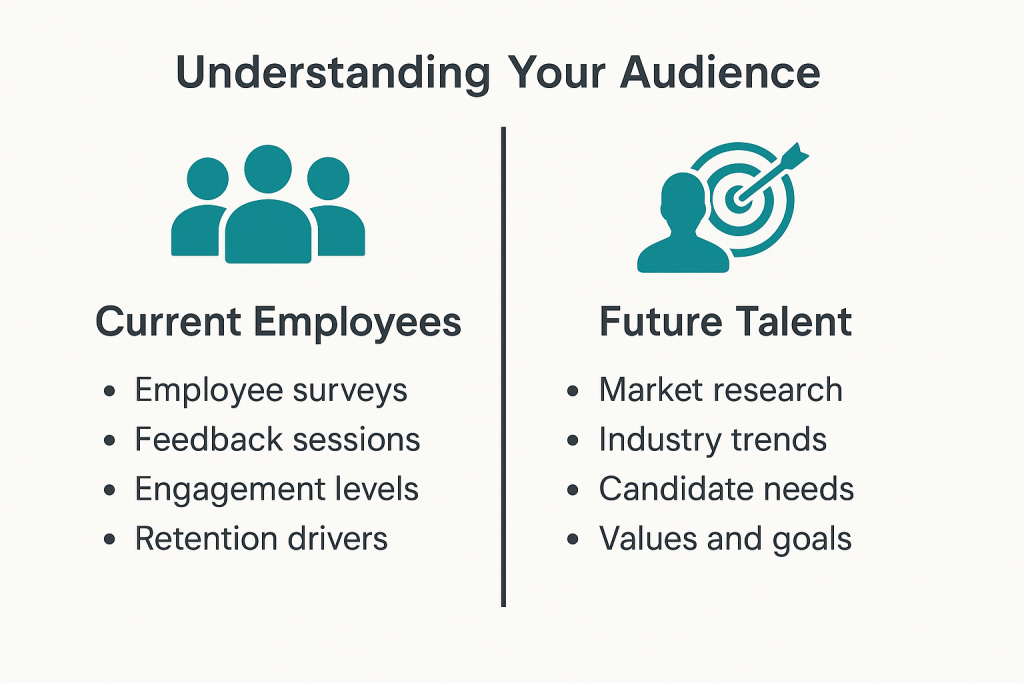
Knowing who you want to attract and who you already have is key to shaping an authentic employer branding strategy. A company’s people are its best storytellers, and understanding their perspectives helps create messages that resonate both inside and outside the organization.
Start With Your Current Employees
Your existing employees are the heartbeat of your employer brand. They experience your company culture every day, the values you promote, the leadership style you encourage, and the environment you cultivate. Listening to their feedback gives you a clear picture of what your company truly stands for.
Conduct employee surveys, feedback sessions, or interviews to uncover honest insights about the work culture, benefits, and growth opportunities. This helps identify what’s working and where improvement is needed. When employees feel heard, they become engaged advocates who help strengthen your employer branding efforts.
Know Your Future Talent
To attract the right talent, you need to understand what potential candidates are looking for. Define your target audience based on skill sets, career goals, and values that align with your company.
Study how job seekers and passive candidates interact with your brand, from your career page and job postings to social media channels. Pay attention to the platforms they use most and tailor your communication accordingly.
When your messaging aligns with the motivations of both current and future employees, your employer brand becomes more human, relevant, and trustworthy, a brand people genuinely want to be part of.
Designing and Communicating Your Employer Brand Message
Once you’ve defined your value proposition and audience, the next step is to craft a message that captures your company’s story and communicates it with authenticity. This is where your employer brand begins to come alive, through words, visuals, and experiences that reflect who you truly are as an employer.
Craft a Clear and Consistent Message
Your employer brand message should communicate what your company stands for and what it feels like to work there. It’s more than slogans or taglines, it’s the tone, attitude, and personality that run through every piece of communication.
Highlight your company culture, purpose, and growth opportunities in a way that connects emotionally. For example, share how your team celebrates success, supports learning, and maintains work-life balance. Keep your language inclusive and approachable so job seekers and employees alike feel represented.
Choose the Right Channels
Your story should reach people where they are most active. Use your career page, social media platforms, and employee stories to showcase the human side of your company. LinkedIn posts, short videos, and blog articles can highlight your team’s experiences, company events, and community impact.
Encourage employees to participate by sharing their stories and testimonials. Authentic voices create powerful employer brand content that resonates more than polished corporate statements.
Maintain Consistency Across Touchpoints
From your hiring process to onboarding and internal communication, ensure your brand voice stays consistent. Every interaction, whether it’s a job ad, a candidate email, or a company event, should reflect the same values and tone.
When your communication feels cohesive and genuine, it builds trust, attracts top talent, and strengthens the bond between your organization and its people.
Bringing It to Life Internally: Culture, Experience, and Advocacy
A strong employer brand doesn’t just exist on paper or in campaigns; it comes to life through your people and the culture you create every day. The way employees feel, collaborate, and grow within your organization defines the real essence of your employer brand.
When company culture supports openness, respect, and belonging, employees naturally become ambassadors who share positive experiences. Culture isn’t built overnight, it’s shaped by leadership actions, team interactions, and consistent communication. When leaders model the company’s values and managers empower their teams, it creates an environment where people feel trusted and motivated.
Encouraging employee advocacy is another powerful way to strengthen your employer branding initiatives. When employees talk about their experiences on social media or in testimonials, they humanize your company and help potential candidates see the people behind the brand. These authentic voices are far more persuasive than polished marketing messages.
Employee engagement programs, recognition initiatives, and career development opportunities also play a major role. When employees feel appreciated and see a path for growth, their enthusiasm reflects externally.
Bringing your employer brand to life internally requires collaboration between HR, marketing, and leadership teams. Each department contributes to creating an experience that aligns with your employer value proposition. When internal culture matches external messaging, you build a brand that not only attracts top talent but also keeps them inspired, loyal, and proud to represent your company.
Measuring Success and Refining Your Strategy
Building an employer brand is not a one-time project. It’s a continuous process that evolves as your company grows, markets shift, and employee expectations change. To ensure your employer branding efforts are effective, it’s important to measure performance and refine your approach regularly.
Start by tracking key metrics such as the quality of applicants, employee engagement scores, retention rates, and feedback from new hires. These indicators reveal how your employer brand is perceived both internally and externally. Monitor your career page analytics and social media engagement to understand which channels attract the most interest from potential candidates.
Employee surveys and exit interviews can also offer valuable insights into how people view your company’s culture, leadership, and opportunities for growth. Use this feedback to identify areas for improvement and celebrate what’s working well.
Refining your employer branding strategy based on real data helps keep it relevant and authentic. The most effective employer brands stay adaptable, they listen, learn, and evolve to meet the needs of their people. By continuously improving, you’ll ensure your company remains a trusted, inspiring, and desirable place to work.
Practical Checklist for Action
Turning your employer branding strategy into action requires focus, consistency, and collaboration. Here’s a practical checklist to help your company build, strengthen, and sustain a positive employer brand.
Employer Branding Action Checklist
- Conduct an employer brand audit to assess current perception among employees and candidates.
- Define or refine your employer value proposition (EVP) based on real employee feedback.
- Align your company culture and values with your internal and external messaging.
- Optimize your career page and ensure it clearly communicates your company story and benefits.
- Create and share employee testimonials and stories across social media and your website.
- Encourage employee advocacy through recognition programs and social engagement.
- Track and measure key metrics such as engagement, retention, and quality of hire.
- Review and refine your employer branding strategy quarterly to stay relevant.
Each step reinforces your company’s commitment to authenticity and employee experience, ensuring your employer brand grows stronger and more human over time.
Final Thoughts on Employer Branding
Employer branding is more than a marketing initiative, it’s the heart of how people experience your company. A strong employer brand reflects genuine values, supportive leadership, and an environment where employees feel respected and inspired to grow.
When your messaging aligns with real employee experiences, it builds trust with both current and potential candidates. Every interaction, from your social media content to your hiring process, shapes how people perceive your company as a place to work.
By investing in a clear employer value proposition, celebrating your people, and staying consistent in your communication, your organization can attract and retain top talent who truly believe in your mission. Remember, employer branding isn’t a one-time project; it’s a continuous commitment to culture, authenticity, and growth, the very qualities that define great workplaces and thriving teams.