Global enterprises generate, store, and publish a staggering amount of content across regions, cultures, and teams. As organizations expand, their digital assets multiply in every possible direction. New languages appear. Local market variations increase. Multiple creative groups produce similar assets at different times. Partners and agencies request access to the same files. Without a unified system, this complexity slows down collaboration and limits the value of the content teams work so hard to create.
A global digital asset management platform brings order to that environment. It acts as a centralized record for every image, video, document, and creative file that helps an enterprise communicate with the world. More importantly, it aligns people and processes across regions so that content can move faster and create better results. This guide explains how a global DAM works, why modern enterprises rely on it, and how it strengthens collaboration across markets.
Why Global Enterprises Need a Single Source of Truth for Digital Assets
Large organizations experience a unique level of content growth. Every new campaign, product, event, or regional update requires countless variations of visuals and messages. When this content is scattered across local drives, email threads, or regional folders, collaboration slows dramatically.
The Rise of Region Specific Content Demands
Enterprises rarely publish one universal piece of content. Markets differ by language, cultural norms, regulatory expectations, and consumer preferences. This requires alternate file sizes, new formats, local creative adaptations, and translations. Without a central system to manage them, teams waste time recreating work that already exists.
Growing Complexity Across Languages and Markets
The more global a brand becomes, the more it must tailor content for each audience. This introduces new versions of the same asset, new color variations, and new file naming patterns. When assets live in isolated storage systems, that complexity leads to confusion and inconsistent outputs.
Fragmented Systems that Slow Down Cross-functional Teams
Many enterprises still rely on old file servers or basic cloud storage for assets. These tools are not built to support creative operations at global scale. They lack structured metadata, search functions, approval workflows, rights management, and brand governance. As a result, teams spend more time searching for assets than using them.
A global DAM solves these problems by acting as a single source of truth that brings all assets, teams, and workflows into one connected space.
What a Global DAM Actually Does for Enterprise Teams

A global DAM does more than store files. It becomes the foundation of a connected content ecosystem.
Centralized Storage that Supports Every Brand and Region
Every asset lives in one organized location. Creative teams upload new files once, and regional teams can find and use them without duplication. This structure allows enterprises to maintain clarity even when managing multiple brands or sub brands under the same organization.
Smarter Search with AI Powered Discovery
Search plays a crucial role in global collaboration. AI driven search allows teams to find assets based on natural language queries, visual similarity, or spoken words inside videos. Instead of relying only on tags, users can type what they need in everyday language and surface the right file instantly.
Structured Workflows that Keep Every Team Aligned
A global DAM supports every stage of the content journey. Files move from creation to review, from approval to publishing, and finally to distribution across platforms. Each step is visible and trackable. This minimizes delays and ensures that teams always work from the latest approved version.
Key Collaboration Challenges Faced by Global Teams
Even the most advanced organizations struggle when content operations are spread across regions.
Time Zone Delays and Long Approval Cycles
When teams operate on different continents, waiting for responses becomes a daily obstacle. Approvals stall. Feedback gets lost. Launch timelines extend. A global DAM maintains one place for collaboration so no step depends on waiting for an email response.
Misaligned Versions and Duplicated Assets
It is common for teams to unknowingly recreate assets that already exist. This increases costs and reduces efficiency. A global DAM prevents duplication by showing the latest approved version and tracking where older assets came from.
Security and Rights Management Concerns
Incorrect file usage can lead to serious consequences. Licensing restrictions, expired usage rights, and unauthorized sharing create legal and financial risks. A DAM manages permissions with precision so that only the right people can view, edit, or download specific assets.
Difficulty Scaling Content across Multiple Platforms
Enterprises publish content on websites, social channels, email systems, e commerce platforms, and partner portals. Without a unified content hub, distributing assets across this ecosystem becomes tedious and error prone.
Global DAM platforms solve these issues through intelligent governance and streamlined workflows.
How Global DAM Enhances Collaboration Across Regions
A global DAM is designed for speed, clarity, and alignment. It empowers teams to work together without friction.
Faster Asset Discoverability with Intelligent Search
AI powered search helps teams find approved assets in seconds. Instead of browsing complicated folder structures, users can type a sentence, upload a reference image, or search for similar visuals. This reduces production time and increases content reuse.
Unified Workflows for Creation, Review, and Approvals
Every team member sees the same workflow and knows what is expected. Designers upload drafts. Reviewers comment directly on the asset. Approvers finalize the version. Regional teams access the completed file. Nothing is lost in translation.
Real Time Access for Distributed Teams
Because global DAM platforms are cloud based, teams can access assets from any location. Designers in Europe and marketers in Asia can collaborate as if they were in the same office.
Clear Ownership, Permissions, and Accountability
Role based access ensures that each user only interacts with the assets they are responsible for. This reduces errors and protects sensitive files. It also builds accountability across teams.
The Business Impact of DAM for Global Enterprises
Beyond collaboration, a global DAM creates measurable business value.
Higher Content Reuse and Reduced Production Costs
Enterprises spend large amounts on creative production. A DAM makes it easy to find reusable assets, which reduces the need to create new ones. This increases return on investment for every photoshoot, video production, and design project.
Shorter Time to Market for Regional Campaigns
When assets are accessible, searchable, and ready to use, regional teams can launch campaigns quickly. This speed is essential for competitive industries that operate on tight schedules.
Stronger Brand Consistency across Local Teams
Brand consistency becomes difficult as enterprises enter new markets. A DAM provides a clear structure that helps teams use the correct logos, colors, typography, and visuals. This strengthens brand recognition worldwide.
Lower Legal and Compliance Risk
Rights management is built into DAM systems. Teams can track expiration dates, licensing limits, and usage terms. This reduces the risk of publishing outdated or unauthorized content.
Essential DAM Features Every Global Enterprise Should Look For
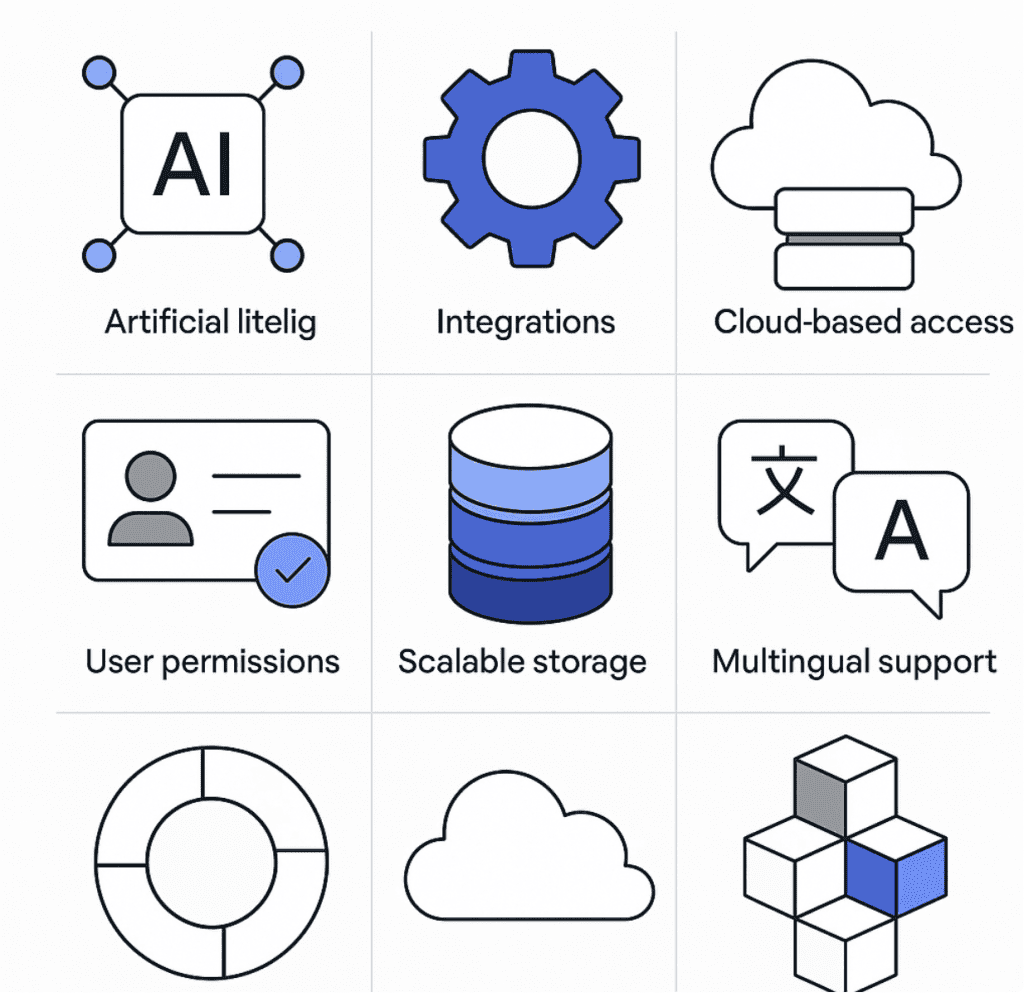
Selecting the right global DAM requires careful evaluation. These are the features that matter most.
Advanced Artificial Intelligence for Search and Automation
AI powers the modern content lifecycle. It supports search, automates repetitive tasks, suggests metadata, and enhances user productivity. It also helps teams find patterns in content usage.
Integrations with CMS, CRM, PIM, Creative Tools, and Cloud Systems
A DAM becomes powerful when it connects to the full enterprise technology stack. Integrations help teams push assets directly into websites, campaigns, product catalogs, and design tools with no manual effort.
Cloud Based Access for Distributed Teams
Global enterprises need instant availability. A cloud based system ensures that all teams can upload, download, and collaborate on assets at any time.
Role-based Permissions and Usage Rights Monitoring
Security remains a priority at enterprise scale. The DAM should allow administrators to assign detailed permissions, track usage rights, and protect sensitive assets.
Scalable Storage and Duplication Control
Enterprises grow quickly. Their storage needs grow as well. A DAM with scalable capacity helps organizations avoid disruption. Duplication control keeps the system organized and avoids costly clutter.
Multilingual Support for Metadata and Regional Workflows
Metadata fields, search functions, and workflow labels need to support multiple languages. This ensures that all teams can navigate the system comfortably.
Global Onboarding and Long-term Support
Successful adoption depends on training and consistent help. Global teams require onboarding resources, local support, and ongoing education that keeps them productive.
Real Examples of How Global DAM Transforms Enterprise Operations
Global DAM platforms deliver results that affect entire teams.
Faster Go-to-market for Regional Product Launches
When a global product launch requires multiple versions of banners, photos, and videos, a DAM ensures that each region receives exactly what they need without delay.
Reduction in Manual Asset Searches and Content Recreation
Teams that once spent hours searching for assets can now find them instantly. This reduces production bottlenecks and prevents costly duplication.
Smooth Brand Transitions during Rebrands and Acquisitions
Rebrands require new logos, guidelines, templates, and visuals. A global DAM allows enterprises to update everything in one place so regional teams can adopt the new identity immediately.
Improved Coordination between Creative, Marketing, and Sales Teams
Sales teams often need the latest visuals for presentations and prospect communication. Marketing teams need campaign assets. Creative teams need direction. A DAM unites these functions and removes friction.
Why Brandy Is a Strong Fit for Global Enterprise Content Operations

Brandy offers a structured, modern, and intuitive way for global enterprises to manage brand identity, digital assets, and cross market collaboration. Its environment supports both creative velocity and brand consistency.
Centralized Control Over Brand Identity and Approved Assets
Enterprises can maintain one unified location for logos, color systems, design templates, brand guidelines, and approved creative content.
Scalable Portals for Local Teams, Partners, and Agencies
Regional offices, agencies, and distributors can securely access the assets they need without slowing down headquarters.
Intuitive Workflows that Simplify Collaboration across Regions
Brandy makes it simple to upload, review, update, and distribute content. This helps teams maintain clarity even during complex campaigns.
Multibrand and Multilingual Support for Enterprise Environments
Large organizations with several brands or markets can manage everything in one place, with metadata and navigation built to support multiple languages.
Final Thoughts: Building a Connected Content Ecosystem at Global Scale
Global enterprises need more than just storage. They need a system that connects every market, every team, and every asset in a single intelligent environment. A global DAM brings clarity to complex operations. It shortens production cycles; it improves brand consistency; it reduces risk. Most importantly, it enables teams to work together without barriers.
For enterprises ready to bring order to content chaos, global DAM adoption becomes one of the most valuable long term investments in their digital strategy.