
Every brand people trust and remember has something in common. They all rely on a set of memorable elements that stay consistent no matter where the brand appears. These elements are called brand assets. They shape how people see your brand, how quickly they recognize it, and how strongly they connect with it. From visual cues like your logo and colors to digital touchpoints like your website and social profiles, each asset plays a role in building identity and trust.
Strong brand assets help your company stand out even in crowded markets. They guide customer perception, support marketing efforts and create a unified experience across every channel. When these assets work together in a structured system, they become one of the most powerful tools for long term brand growth.
If you want your brand to be instantly recognizable and easy to trust, understanding your brand assets is the first step. Let’s explore the most important types you should know.
14 Most Important Types of Brand Assets
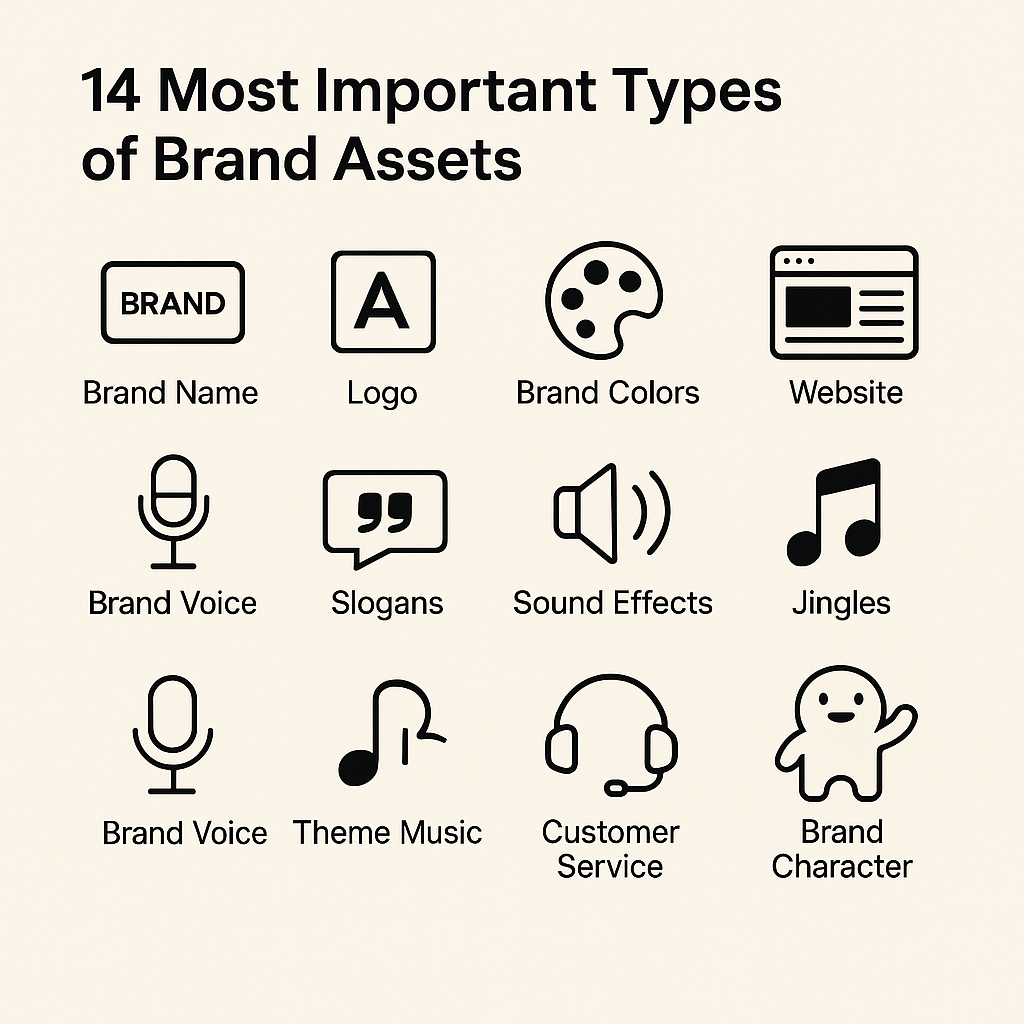
These core assets shape how people recognize, remember and trust your brand across every touchpoint. Each one plays a unique role in building a consistent identity that stays memorable over time.
Brand Name
A brand name is the starting point of your entire identity. It shapes how people perceive your business before they even interact with it. A strong name is easy to remember and evokes the right emotions. It also sets the tone for all future branding decisions.
A powerful brand name usually has these qualities:
- Easy to pronounce
- Simple to spell
- Clear meaning or emotional cue
When used consistently, your brand name becomes a mental shortcut that instantly reminds people of your values and promises.
Logo
Your logo is the face of your brand. It gives customers a quick and memorable way to identify you. A well crafted logo connects your personality with a clear visual symbol. It plays a major role in recognition across packaging, websites and social platforms.
Strong logos often rely on:
- Simple shapes
- Clean lines
- A symbol or wordmark with meaning
When people recognize your logo without reading your name, you know your brand identity is working.
Brand Fonts
Brand fonts influence how people read, understand and feel your content. Typography communicates personality long before someone reads the actual message. Choosing a small set of fonts keeps your identity consistent across digital and print channels.
Effective brand font systems include:
- One font for headlines
- One font for body text
- Optional accent font for emphasis
These choices help create a clear visual rhythm that customers instantly associate with your brand.
Brand Colors
Color is one of the fastest ways to trigger emotion and recognition. People form impressions within seconds, and your palette plays a major role in that first moment. Brands that use consistent colors build strong visual memory.
Color palettes usually include:
- Primary brand colors
- Secondary support colors
- Accent colors for highlights
When used wisely, brand colors unify your design system and help customers identify your brand at a glance.
Website
Your website is often the first place customers visit to learn about your brand. It communicates your credibility and showcases your products, values and style. A good website reflects your identity through visuals and content.
Your website often includes:
- Brand colors and fonts
- Consistent imagery
- Clear messaging and user paths
When these elements align, your site becomes a trust building asset that supports every part of your marketing.
Social Media Profiles
Social profiles help your brand live inside the daily lives of your audience. They give you a place to share updates, show personality and build relationships. Consistency matters because customers notice patterns over time.
Strong social brand assets feature:
- Unified profile photos
- Branded cover images
- Clear tone of voice in posts
With the right structure, social platforms become powerful long term visibility tools.
Mobile Apps
A mobile app provides direct access to your brand without competition from other content. It appears on the home screen, which boosts awareness every time a user unlocks their phone. Apps also allow deeper engagement.
Apps often highlight brand identity through:
- Icon design
- In app color palette
- Tone of voice in microcopy
This combination ensures that the app feels like a natural extension of your brand.
Brand Voice
Brand voice defines how you speak to your audience. It shows your personality through words, tone and style. When it stays consistent across emails, ads, websites and support messages, it builds trust and familiarity.
A strong brand voice includes:
- Clear tone
- Predictable style
- Vocabulary that reflects values
This creates communication your audience can instantly recognize.
Slogans and Taglines
A slogan communicates your core message in a short and memorable way. It explains your promise and helps customers recall your brand even when they do not see your logo.
Good slogans usually have:
- Rhythm or flow
- Clear meaning
- Emotional connection
When used across marketing, a tagline becomes a powerful memory anchor.
Sound Effects
Short sound cues help customers identify your brand instantly. These audio signals become strong memory triggers when repeated over time. They work well for apps, digital platforms and product interactions.
Common uses include:
- App opening sounds
- Notification chimes
- Product interaction cues
A distinct sound can make your brand instantly familiar even without visuals.
Jingles
Jingles are short musical pieces designed to stay in a listener’s mind. They use simple melodies and repetition to create brand recall. This makes them effective in commercials and video content.
A catchy jingle usually includes:
- Easy melody
- Short memorable lines
- Positive emotional tone
When people can hum your tune, your brand asset has done its job.
Theme Music
Theme music helps set the mood for your content. It appears in podcasts, videos or branded series and becomes a signature sound your audience recognizes.
Effective theme music often features:
- A consistent melody
- Matching emotional tone
- Repeated use across episodes
It adds professionalism and makes your content feel unified.
Customer Service
Customer service is an experiential brand asset that shapes overall perception. Every interaction affects how customers feel about your brand and whether they trust you.
Great service usually focuses on:
- Clear communication
- Empathy and patience
- Fast problem solving
Positive experiences build long term loyalty and strengthen brand reputation.
Product Packaging
Packaging is a physical brand asset that tells a story before the customer even opens the product. It can communicate quality, values and personality through visuals and materials.
Effective packaging includes:
- Consistent colors and fonts
- Thoughtful unboxing flow
- Materials that match brand values
Good packaging creates excitement and strengthens brand connection.
Brand Characters
Brand characters bring personality to life through mascots or illustrated figures. They humanize your brand and create emotional connection.
Strong brand characters often have:
- Clear personality traits
- Distinct visual style
- Presence across ads and content
When used consistently, characters become symbolic representations of your brand.
How to Organize and Manage All Brand Assets in One System
Managing brand assets becomes difficult when files are scattered across folders, devices or team chats. Over time, this leads to outdated visuals, mixed styles and inconsistent messaging. A unified system brings everything together so teams can work smoothly and avoid mistakes. When all assets live in one organized home, it becomes easier to stay consistent and protect your brand identity.
A well structured brand asset system usually includes:
- A single library for logos, colors, fonts and templates
- Clear guidelines for usage
- Easy access for teams, partners and creators
With a central kit, everyone works from the same source of truth, which keeps your brand aligned across every channel. Tools like Brandy make this process simple by giving teams one organized place to store, share and update their entire brand system without confusion or wasted time.
How Teams Use Brand Assets to Build Strong Identity Across Channels
Brand assets only create real impact when teams use them consistently. Marketing, design, product and customer support all rely on the same visuals and messages to create a unified experience. When everyone works with aligned assets, the brand feels reliable and recognizable across every touchpoint. This consistency helps customers trust your brand more quickly and understand what you stand for.
Teams typically use brand assets to:
- Create campaigns that look and feel the same across platforms
- Produce content faster with ready to use templates
- Reduce errors caused by outdated or missing files
When teams stay aligned, identity becomes stronger, clearer and easier for audiences to remember.
Conclusion
Brand assets are the building blocks of a strong identity. They shape how people recognize your brand, how they feel when they interact with it and how easily they can recall it across different platforms. When these assets are managed with intention and consistency, they become one of the most valuable tools for long term growth.
Now is a good time to review your current brand system and identify what needs strengthening. Clear visuals, aligned messaging and an organized asset library help every team stay connected to the same identity. With a structured approach, your brand becomes easier to trust, easier to remember and easier to scale.