Influencer marketing has moved far beyond being a trend or experimental channel. Today, more than ninety percent of marketers work with influencers in some form, whether through brand ambassador programs, one-off collaborations, or long-term creator partnerships. Despite this widespread adoption, many brands still struggle to execute influencer campaigns consistently and efficiently.
The challenge is not finding influencers or choosing platforms. The real challenge lies in how brands plan, manage, and scale influencer relationships. Too often, teams start from scratch with every new collaboration. Campaign details live in scattered documents, assets are shared through temporary links, approvals happen over email threads, and expectations change mid-campaign. This lack of structure leads to wasted time, brand inconsistency, and disappointing results.
Successful influencer marketing requires more than creativity. It requires strategy, systems, and clear communication. In this article, we will explore real examples of influencer campaigns that worked, examine why they succeeded, and outline practical lessons brands can apply to improve their own influencer marketing efforts.
Why Influencer Marketing Still Feels Chaotic for Many Brands
Influencer marketing sits at the intersection of creativity and control. On one hand, brands want creators to feel free to express themselves authentically. On the other, brands need to protect their identity, messaging, and reputation.
Without a clear framework, this tension often leads to confusion. Influencers may receive vague briefs. Brand teams may assume creators understand brand tone or visual standards. Approval processes may be undefined. Assets may be shared inconsistently. Each of these small gaps compounds into larger problems.
What separates successful influencer programs from unsuccessful ones is not budget or celebrity reach. It is preparation. Brands that invest time upfront in defining goals, workflows, and resources consistently outperform those that rely on improvisation.
What Successful Influencer Marketing Has in Common
Before diving into specific examples, it helps to identify the common traits behind successful campaigns.
First, alignment matters more than reach. Influencers who share a brand’s values, audience, and tone tend to produce better results than creators chosen solely for follower count.
Second, clarity enables creativity. Influencers perform best when expectations are clear. Clear guidance does not limit creativity. It removes uncertainty.
Third, structure supports scale. As campaigns grow in size or duration, organization becomes essential. Without systems for assets, approvals, and communication, even strong creative ideas fall apart.
How Leading Brands Put Influencer Marketing Principles Into Action
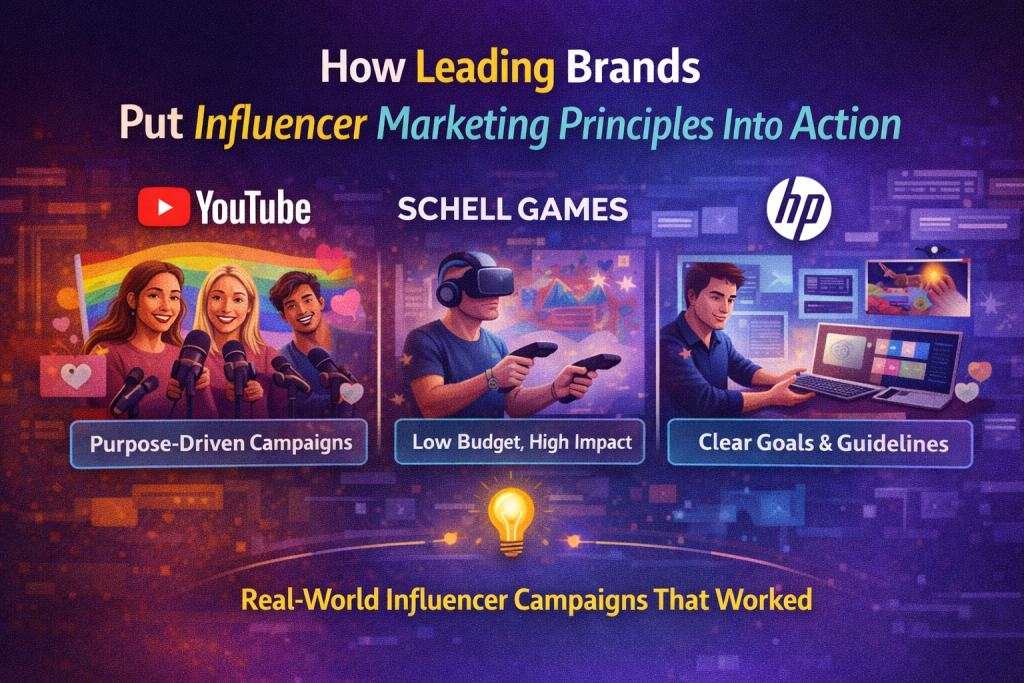
The following real-world examples illustrate how leading brands apply these principles in practice.
YouTube Pride 2021 x THE FIFTH
For Pride 2021, YouTube Originals set out to celebrate progress within the LGBTQIA+ community through a digital event featuring high-profile performers. The campaign needed to feel inclusive, joyful, and culturally relevant, particularly for Gen Z audiences.
To promote the event, YouTube partnered with THE FIFTH, a marketing agency experienced in creator-led storytelling. Instead of relying on traditional promotional content, the team designed a series of mini virtual events. These included livestream formats such as get ready with me sessions and interactive challenges that felt natural to the platforms and creators involved.
Execution was the true differentiator. Influencers from TikTok and YouTube were paired intentionally based on shared audiences and personal chemistry. Each group received structured support, including branded livestream templates, assigned time slots, chat moderation, and clear expectations around content flow.
Despite the complexity of coordinating multiple creators across platforms and time zones, the campaign ran smoothly. The livestreams generated millions of views and impressions while raising funds for an LGBTQ+ charity.
The success of this campaign demonstrates that purpose-driven influencer marketing thrives when creativity is supported by organization. Clear direction, shared values, and operational support allowed influencers to focus on engaging their audiences rather than managing logistics.
Schell Games x GRIN
Influencer marketing does not require massive budgets to succeed. Schell Games proved this with a campaign promoting the launch of a new virtual reality game.
Rather than scripting influencer content or running traditional paid ads, Schell Games partnered with GRIN and trusted creators to tell the story. Influencers received early access to the game and were asked to film themselves playing naturally. Each video included a simple call to action, either encouraging viewers to purchase the game or add it to a wishlist.
This approach shifted the emphasis from promotion to demonstration. Audiences watched creators experience the game in real time, providing honest reactions and feedback. The content felt authentic rather than manufactured.
Despite operating with a limited budget, the campaign delivered strong results and exceeded return on investment expectations. One key factor behind this success was preparation. Schell Games developed a standardized partner vetting process and tracked creator performance across campaigns.
The takeaway is clear. When influencers receive the right tools, guidance, and trust, even small campaigns can deliver meaningful impact.
HP x Gen.video
HP approached influencer marketing with a long-term perspective. The goal was not only to promote gaming laptops but also to educate audiences about features, performance, and accessibility across multiple platforms.
Working with Gen.video, HP designed a multi-layered influencer strategy. Established creators with proven performance were paired alongside emerging influencers producing high-quality content. This mix allowed HP to reach both large audiences and niche communities.
The campaign produced a wide range of content across YouTube, Twitch, and other platforms. As a result, consumers researching HP’s gaming laptops encountered consistent messaging from multiple trusted voices.
What made this campaign particularly effective was coordination. All creators operated within a shared framework that defined messaging priorities, content expectations, review processes, and usage rights. This allowed HP to scale the campaign while maintaining brand consistency.
The lesson here is that influencer marketing becomes more powerful when brands treat it as an ecosystem rather than isolated partnerships.
When Influencer Marketing Goes Wrong
While success stories are inspiring, many brands learn influencer marketing lessons the hard way. Several common issues repeatedly cause campaigns to fail.
Brand inconsistency is one of the most frequent problems. With multiple creators publishing content simultaneously, even small discrepancies such as outdated logos or incorrect messaging can spread quickly.
Brand crises are another risk. Influencers are independent individuals, and when controversies arise, affiliated brands can suffer reputational damage if crisis protocols are not in place.
Content chaos also undermines campaigns. Influencer marketing generates a large volume of assets, including images, videos, captions, links, and versions. Without organization, teams lose visibility into what is approved, live, or outdated.
Finally, unclear communication leads to poor returns. When influencers misunderstand expectations or brands fail to provide timely feedback, campaigns lose momentum and impact.
Fortunately, these issues are preventable.
Common Influencer Marketing Mistakes and How to Avoid Them
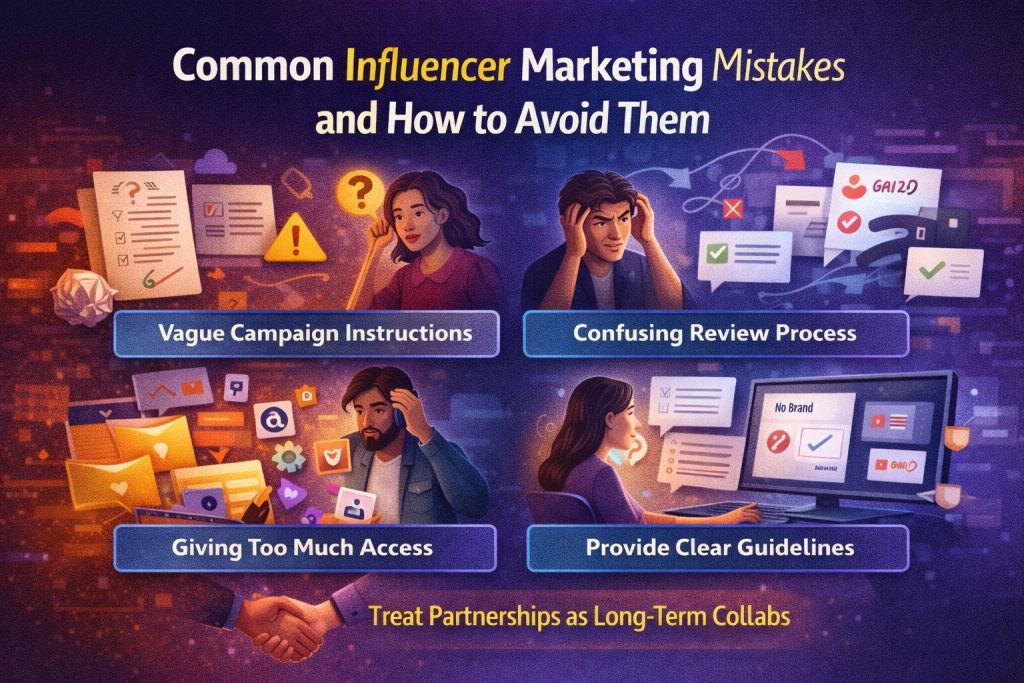
Even well-planned influencer campaigns can fall apart when foundational elements are overlooked. Most influencer marketing failures are not caused by poor creative talent but by gaps in communication, structure, and preparation. Understanding these common mistakes helps brands avoid unnecessary friction and build stronger, more reliable collaborations.
Not Sharing Clear Campaign Details From the Start
One of the biggest mistakes brands make is failing to communicate campaign expectations clearly at the outset. Influencers need more than a general idea of what a brand wants. They need a comprehensive creative brief that outlines campaign goals, timelines, deliverables, responsibilities, key messages, and available assets.
When this information is missing or shared piecemeal, influencers are forced to make assumptions. This often leads to misaligned content, missed deadlines, or unnecessary revisions. Clear campaign documentation ensures that everyone begins on the same page before content creation starts, saving time and reducing frustration on both sides.
Lacking Defined Review and Approval Workflows
Another common issue is the absence of a structured review and approval process. Without clear guidelines, brands risk being surprised by content that does not meet expectations, while influencers may feel confused or overwhelmed by last-minute feedback.
Brands should define who is responsible for reviewing content, what quality standards apply, and how revisions should be handled. Establishing timelines for feedback and approval helps maintain momentum without placing undue pressure on creators. A transparent review process protects brand integrity while still respecting creative autonomy.
Providing Too Much or Too Little Asset Access
Access management plays a critical role in influencer collaborations. Influencers need the right assets at the right time, but giving them access to an entire brand library can create confusion and introduce security or rights management risks.
At the same time, limiting access too much can slow production and lead to incorrect usage. The best approach is curated access. Influencers should receive only the assets relevant to their specific campaign, including approved logos, visuals, links, and references. Controlled access simplifies the creative process and ensures brand consistency.
Overlooking the Importance of Brand Guidelines
Many brands underestimate how essential brand guidelines are for influencer success. Influencers are external partners, not internal team members. They cannot be expected to intuitively understand brand voice, visual identity, or values without guidance.
Providing clear direction on tone, messaging, visual style, and brand principles helps creators make better creative decisions. Even optional guidelines give influencers a framework to work within, ensuring that the final content feels authentic to both the creator and the brand.
Ignoring the Long-Term Value of Influencer Relationships
A final mistake brands often make is treating influencer marketing as a series of one-off transactions. Short-term thinking limits the potential of influencer partnerships and increases onboarding effort with every new campaign.
Influencer marketing works best when relationships evolve over time. Organized onboarding, consistent communication, and easy access to resources make collaborations smoother and more enjoyable. Influencers who feel supported and respected are more likely to deliver stronger results and continue working with a brand long term.
The Role of Systems in Influencer Marketing Success
Influencer marketing becomes sustainable when it is supported by systems rather than ad hoc processes. Brands that rely on scattered documents, temporary links, and email threads struggle to maintain consistency as campaigns scale.
Centralizing assets, guidelines, and campaign information reduces friction for both internal teams and influencers. Clear documentation ensures that everyone works from the same understanding, while asset libraries prevent outdated or incorrect usage. Structured workflows streamline approvals and distribution, and permission controls protect sensitive materials.
When systems are in place, teams spend less time managing logistics and more time focusing on strategy and creativity. Influencers, in turn, can dedicate their energy to producing content that resonates with audiences.
Perfecting Influencer Partnerships for Long-Term Growth
Influencer marketing is not just about launching campaigns. It is about building relationships rooted in trust, clarity, and mutual value. Brands that invest in structure and communication create partnerships that strengthen over time.
Successful brands treat influencer marketing as an extension of their broader brand ecosystem. They provide guidance without micromanagement, support creativity without sacrificing consistency, and prioritize collaboration over control.
As the influencer landscape continues to evolve, brands that adopt disciplined yet flexible approaches will stand out. By combining strong systems with genuine relationships, influencer marketing becomes not just a channel but a sustainable growth engine.
Final Thoughts
Influencer marketing delivers powerful results when done right, but success is rarely accidental. The most effective campaigns are built on alignment, preparation, and strong operational foundations.
Real-world examples show that creativity thrives when supported by clarity. Influencers perform better when expectations are clear and resources are accessible. Brands protect their identity when systems guide collaboration.
There is no universal playbook for influencer marketing, but one principle remains consistent. Trust works best when supported by structure.
Brands that understand this do not just run influencer campaigns. They build scalable partnerships that deliver lasting value.