
Picture this: a marketing team scrambling before a product launch because no one can find the approved logo. Three designers are reworking the same banner because an outdated version got used again. A legal team is flagging a campaign because an unlicensed image slipped through. This kind of chaos is exactly what a skilled digital asset manager prevents every single day.
Digital asset manager jobs are among the fastest growing roles in modern marketing operations. Companies of every size are realizing that their content libraries are mission-critical infrastructure, and that someone needs to own the strategy behind them. Whether you are exploring this career for the first time or looking to move up, this guide covers everything: what the role actually involves, who hires for it, what it pays, which skills matter most, and how to land your next position.
What is a Digital Asset Manager?
Managing digital content without a dedicated expert is like running payroll without an accountant. A digital asset manager brings the structure, strategy, and accountability that keeps a company’s content library working for the business rather than against it.
The Role in Plain English
A digital asset manager is the professional who brings order to everything a company creates, stores, and distributes digitally. Think of them the way you might think of a financial controller, except instead of overseeing budgets and transactions, they oversee content. They make sure the right assets are findable, usable, and legally cleared at the moment a team needs them.
These professionals sit at the intersection of creative, marketing, legal, and technology. They are equal parts systems thinker, brand guardian, and platform administrator. In organizations where content drives revenue, that combination is genuinely valuable.
What Counts as a Digital Asset?
A digital asset is any piece of branded content your organization creates, uses, or distributes that lives in a digital format. In practice that means product photography and brand logos, video ads and broadcast footage, social media templates and campaign graphics, presentation decks and sales collateral, audio files and approved voiceovers, and brand guidelines along with licensed messaging.
None of these assets manage themselves. Without a dedicated system and a dedicated person behind it, they pile up, overlap, go outdated, and cost teams hours every week in wasted search time.
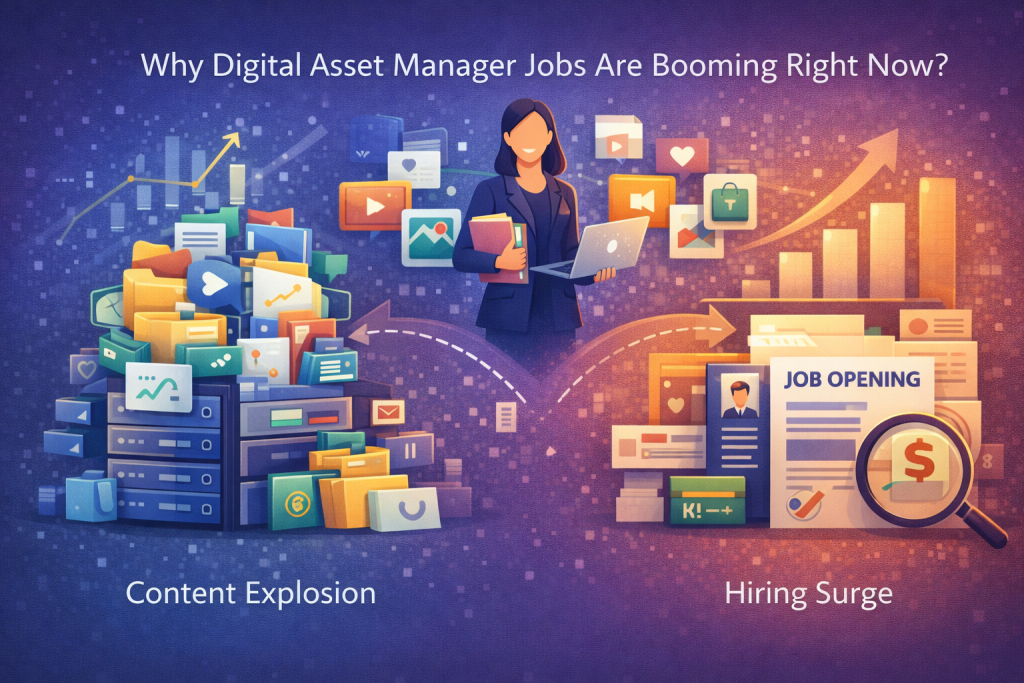
Why Digital Asset Manager Jobs Are Booming Right Now?
The volume of content brands produce today has outpaced every informal system teams used to rely on. Companies are no longer asking whether they need dedicated asset management. They are asking how quickly they can hire for it.
The Content Volume Problem
A mid-size brand today might produce thousands of assets per quarter across web, email, social, paid media, retail channels, and internal communications. Even five years ago that volume was a fraction of what it is now. AI-powered content tools have accelerated production even further, meaning more assets enter the pipeline faster than ever before.
Informal solutions collapse under that weight. A shared Dropbox folder works fine for a ten-person startup. It becomes a liability for a team of fifty managing assets across five markets. That is the inflection point where companies start hiring dedicated digital asset managers.
Where the Industry Is Heading?
The digital asset management software market is projected to grow at a compound annual rate of around 15 percent through the end of the decade. Industries ranging from retail and healthcare to entertainment and financial services are actively building out DAM functions for the first time. That growth translates directly into job openings, and it explains why candidates with platform experience and strong organizational instincts are being recruited competitively right now.
Core Responsibilities of a Digital Asset Manager
The role is broader than most people expect when they first encounter the job title. Digital asset managers touch everything from daily file intake to long-term governance strategy, making them one of the most cross-functional hires a marketing operation can make.
Metadata Management and Asset Cataloging
This is where most of the daily work happens. Metadata management means building and maintaining the taxonomy, tagging logic, and naming conventions that make thousands of files searchable in seconds. A well-structured asset library is not just a storage solution. It is a productivity system that eliminates the time teams waste hunting for files that already exist.
Good metadata strategy goes beyond file names. It includes usage rights, expiration dates, campaign attribution, regional restrictions, and format specifications. Digital asset managers define the rules and then maintain them at scale.
Asset Ingestion and Quality Control
Before any asset enters a DAM system, it needs to pass quality checks. Digital asset managers establish the intake process for files arriving from creative teams, freelancers, and external agencies. This includes reviewing resolution and format standards, verifying licensing and usage rights, confirming brand alignment, and routing assets through approval workflows before they go live in the library.
A well-run ingestion process prevents two of the most common and expensive problems in content operations: teams using outdated assets and teams unknowingly using unlicensed content.
DAM Platform Administration and User Training
The technical side of the role involves managing the DAM platform itself: setting permissions, configuring user access levels, building out folder structures and collection logic, and connecting the system to other tools in the marketing stack. Digital asset managers also train the people who use the system, from junior designers to senior marketing leaders.
This training function matters more than most job descriptions acknowledge. A powerful DAM platform only delivers value when the people using it know how to get the most out of it. Digital asset managers who can teach clearly and document processes well tend to advance faster.
Cross-Team Collaboration and Brand Governance
Digital asset managers serve as the connective tissue between creative, marketing, legal, and IT. On any given day that might mean working with a design team to update campaign assets, coordinating with legal to confirm licensing for a global rollout, or advising IT on a new integration between the DAM and the CMS. Brand governance, ensuring only approved assets reach external channels, is a core part of the accountability these professionals carry.
Types of Digital Asset Manager Jobs and Where to Find Them
Not all digital asset manager positions look the same, and the differences go well beyond company size. Industry, work model, and contract structure all shape what the day-to-day actually looks like and which opportunities are the best fit for where you are in your career.
In-House Corporate Roles
Large enterprises in tech, retail, consumer packaged goods, and financial services tend to offer the most structured digital asset manager positions. These roles come with defined career paths, comprehensive benefits, and the opportunity to manage asset libraries at genuine scale. If you want depth and long-term advancement within a single organization, in-house corporate is the right target.
Media and Entertainment
Film studios, broadcasters, music labels, and publishers work with rich media at extraordinary volume. DAM professionals in this space need fluency in licensing complexity, version control for creative content, and multi-platform distribution workflows. The work is specialized and demanding, but compensation tends to reflect that. Organizations like major streaming platforms and global publishing houses have been among the most aggressive in building out DAM teams.
Agency and Contract Roles
Creative agencies and staffing firms place digital asset managers on project-based and contract engagements. These roles are ideal for professionals who want to build experience across multiple platforms and industries quickly. The tradeoff is less stability, but the exposure to varied DAM implementations accelerates skill development faster than most in-house roles.
Remote and Hybrid Opportunities
Cloud-based DAM platforms have made fully remote digital asset manager jobs genuinely viable for the first time. A growing number of companies hire for these positions without geographic restriction, particularly when the DAM platform is the primary workspace. During the application process, ask specifically whether remote access to all required systems is supported from day one, and what the expectation is for on-site time over the following twelve months.
Digital Asset Manager Salary: What You Can Realistically Earn
Compensation in this field varies more than most candidates expect before they start researching. Understanding what drives the range from entry level to senior helps you benchmark accurately and negotiate with confidence.

Entry-Level Salary Expectations
Candidates stepping into their first digital asset manager role can expect annual salaries in the range of $55,000 to $70,000. Contract and hourly positions in this tier typically pay $55 to $60 per hour. What pushes a candidate toward the top of that range is a combination of hands-on DAM platform experience, demonstrated metadata management skills, and a portfolio that shows they can maintain real asset libraries rather than just describe the concept.
Mid-Level and Senior Compensation
Professionals with five or more years of experience, team leadership responsibilities, or specialization in AI-driven asset management regularly earn $74,000 to $110,000. Director-level and Head of Digital Asset Management positions at large organizations can reach $130,000 to $150,000 or higher, particularly in markets like New York, Los Angeles, Chicago, and San Francisco.
What Affects Your DAM Salary?
Five factors consistently move compensation up or down in this field. Geography matters significantly, with major metro markets paying 15 to 25 percent above the national average. Industry plays a role too, with entertainment and tech skewing higher than nonprofit or education.
Company size affects pay, with enterprise roles typically outpacing small to mid-market positions by $10,000 or more. Platform expertise commands a premium, particularly certified proficiency in leading DAM tools. And right now, AI and automation skills are the fastest growing salary differentiator in the entire field.
Skills That Hiring Managers Actually Look For
Job descriptions in this space can feel like a wish list with no clear priority order. Knowing which skills genuinely move the needle in hiring decisions helps you focus your preparation where it counts most.
Technical Skills You Need to Build
The technical requirements that appear most consistently across digital asset manager job postings center on a core set of competencies. Adobe Creative Suite proficiency, specifically Photoshop, Bridge, Premiere, and Lightroom, is foundational and appears in nearly every listing.
Hands-on experience with major DAM platforms like Brandy, Canto, Bynder, or Widen is expected rather than optional at this point. Metadata schema design, meaning the ability to build taxonomy that scales as asset volume grows, separates candidates who understand the job strategically from those who only understand it operationally. File format expertise across video, image, and audio delivery specifications rounds out the technical picture, as does working knowledge of how DAM platforms integrate with CMS, project management tools, and creative software.
Soft Skills That Separate Good Candidates from Great Ones
Hiring managers consistently flag organizational discipline, clear written communication, and the ability to explain technical systems to non-technical audiences. The digital asset manager who can train a global marketing team on a new DAM workflow without frustrating anyone is rare and genuinely valuable. Attention to detail matters at every level of the role because metadata errors and mislabeled assets compound quickly at scale.
Emerging Skills Worth Investing In Now
AI-powered asset tagging and search, rights and licensing automation, and DAM-to-marketing stack integration work are where the most competitive candidates are differentiating themselves today. Platforms like Brandy are embedding AI across search, organization, and distribution. Candidates who understand how these AI layers work and how to configure them are being positioned as operational strategists rather than file librarians. That distinction matters enormously for long-term career trajectory and compensation growth.
How to Get a Digital Asset Manager Job: Step by Step
Breaking into or advancing within digital asset management comes down to a handful of moves done well. The candidates who land these roles consistently are not the ones with the longest resumes. They are the ones who can show real work.
Build Your Foundation First
Two paths lead into digital asset management. The formal education route typically runs through communications, library science, information management, or digital media programs. The experience-based path draws on backgrounds in photography, video production, content creation, or marketing operations. Employers increasingly weight demonstrated competency over degree type, but both paths are legitimate. The key is being able to point to real work.
Get Hands-On With DAM Platforms
You cannot walk into a digital asset manager interview without having used a DAM platform. Many leading tools offer free trials or training environments. If your current role does not involve a DAM, propose one. Volunteer to audit the team’s file storage, build a cleaner organizational structure, and document what you created. That initiative is exactly the kind of evidence hiring managers want to see.
Build a Portfolio That Shows Rather Than Tells
A strong DAM portfolio does not have to be elaborate. Sample metadata structures, workflow diagrams, governance documentation, and before-and-after examples of organized asset libraries all demonstrate competency concretely. If you can show a messy file structure you inherited and the organized, tagged, permission-controlled system you built from it, you have made a compelling case without saying a word about your resume.
Tailor Your Resume for Each Role
Pull keywords directly from the job posting and weave them into your experience section. Quantify everything you can. Reducing asset retrieval time by 40 percent is more convincing than saying you improved workflow efficiency. Candidates with creative, marketing, or IT backgrounds should make their transferable experience explicit rather than leaving hiring managers to infer it.
Common Mistakes to Avoid in the DAM Job Market
Most rejections in this field come down to the same few gaps showing up at the wrong moment. Knowing what they are ahead of time means you can close them before they cost you an opportunity.
Applying without hands-on platform experience is the single most common reason qualified-looking candidates get passed over. Job descriptions ask for it because hiring managers need someone who can contribute from week one, not month six.
The second mistake is treating metadata management as a footnote rather than a centerpiece. Candidates who cannot speak clearly about taxonomy design, naming conventions, and governance structures signal they do not fully understand what the job requires.
The third mistake is failing to demonstrate business impact. DAM is not administrative work. It supports revenue, brand integrity, and operational efficiency. Candidates who can connect the dots between organized asset libraries and measurable business outcomes stand out consistently.
Your Next Move in Digital Asset Management
The field rewards people who stay ahead of how the tools and expectations are evolving. Where you go next depends on the foundation you build today.
Digital asset manager jobs reward professionals who can think in systems and communicate with clarity. The field is growing, the compensation is competitive, and the organizations hiring for these roles are increasingly looking for candidates who understand how modern DAM platforms drive real operational value, not just candidates who can keep files organized.
Platforms like Brandy represent exactly where the industry is heading: intelligent, AI-powered content hubs that connect assets, workflows, and teams across the entire content lifecycle. Building fluency with tools at this level of sophistication is one of the most practical investments you can make in a DAM career right now. Whether you are just getting started or ready to move into a senior role, the path forward starts with the work you choose to build today.