Scroll through your favorite apps, walk past a storefront, or glance at a package on your desk. Chances are, the first thing that grabs your attention is the logo. It might be a swoosh, a bitten apple, or a bold wordmark you instantly recognize. That tiny symbol speaks volumes before you even read a word.
But what makes a logo more than just a good-looking design? Is it simply art for branding, or is it something more strategic?
The truth is, a logo is one of the most valuable parts of your brand toolkit. It is not just a visual marker; it is a powerful asset that carries emotional weight, brand recognition, and legal protection. From marketing to merchandise, websites to invoices, your logo appears everywhere your brand does.
In this blog, we will unpack what qualifies as a brand asset, where the logo fits in, and why managing it correctly is key to building a strong, consistent identity that lasts.
What Is a Brand Asset?
A brand asset is anything that helps people recognize, remember, and trust your brand. These assets are the visual and verbal elements that stick in people’s minds and shape how they feel about your business. Think of your logo, brand colors, typography, tagline, packaging, tone of voice, and even your brand mascot. When used consistently, they create familiarity and build a strong identity.
What sets brand assets apart is their ability to trigger instant recognition. You do not need to read the word “Coca-Cola” to know what it is. The red and white script does the job on its own. That emotional recall is what gives brand assets real power.
But they are not just about recognition. Brand assets also carry meaning. The colors you use can stir emotions. The font can suggest trust, luxury, or creativity. The logo can communicate your values before a single word is spoken.
To keep these assets working in your favor, they need to be clear, consistent, and protected. That is where brand asset management platforms come in.They make sure everyone on your team is using the right logo, the approved color codes, and the most up-to-date tagline, whether they are posting on social media or printing product labels.
In short, a brand asset is any element that helps shape how your audience sees and connects with your brand. And among them, the logo stands out as one of the most powerful. Let’s explore why.
The Logo’s Role in Visual Identity
A logo is not just a symbol. It is a doorway into your brand’s personality, values, and promise. When designed with intention, a logo can tell your entire story in one quick glance. That is why it plays such a central role in your visual identity.
From color to shape to typography, every element in a logo has a job to do. Colors are emotional triggers. Blue builds trust. Green feels calm. Red brings energy. Fonts also have their own voice. A soft script might feel approachable, while a bold sans-serif sends a modern message. These details come together to create an impression that sticks.
Think of the Nike swoosh. There is no tagline, no image, no explanation – just a simple shape. And yet, it is loaded with meaning. It stands for movement, performance, attitude, and excellence. That is the power of a logo when it becomes deeply tied to a brand’s identity.
Logos also help people make quick decisions. In a crowded digital world where attention spans are short, a familiar logo can be the reason someone clicks, chooses, or trusts your brand over another.
And it is not just customers who rely on your logo. Team members, partners, and vendors all use it as a visual reference. It sets the tone and provides consistency in everything from presentations to packaging.
So yes, a logo is art, but it is strategic art. It is a visual shortcut that brings together recognition, emotion, and trust. And when used well, it becomes one of the most powerful tools in your entire brand ecosystem.
Why Is the Logo a Core Brand Asset
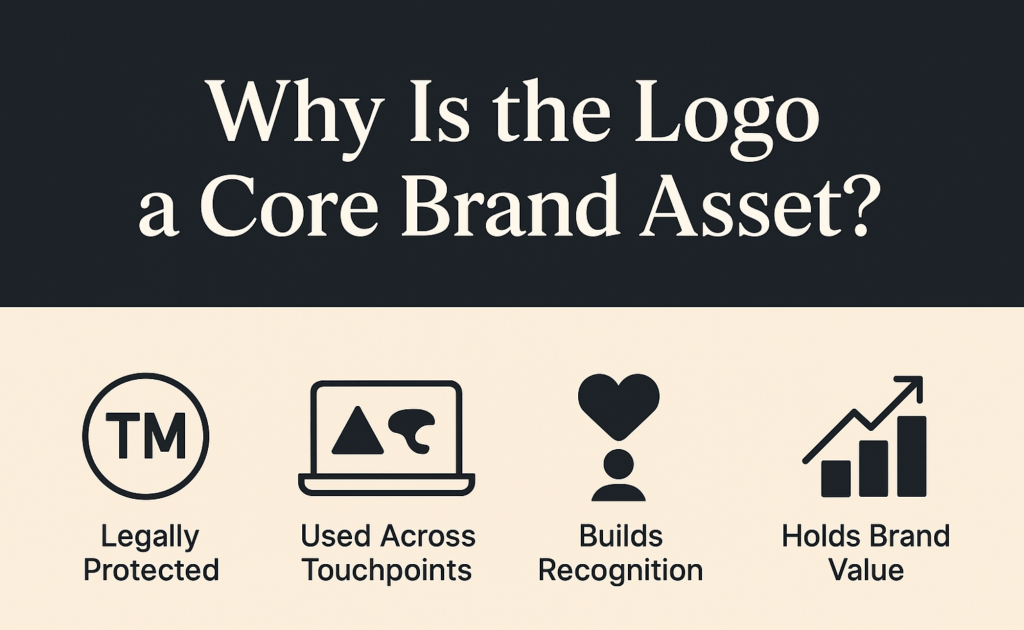
A logo does more than decorate your website or packaging. For marketers, designers, and brand managers, it is one of the most essential assets a company owns. It carries meaning, legal value, emotional weight, and years of brand equity, all packed into one visual mark.
Let’s break down why your logo is not just a nice-to-have but a must-protect brand asset.
It Holds Legal Power
Most companies file for trademark protection on their logo early in the brand-building process. That trademark gives the business legal rights to own and protect its visual identity. If someone tries to use a similar design, your trademark gives you the right to take action. This legal value makes the logo more than a creative output, it is intellectual property.
It Lives Everywhere
Your logo appears in places you might not even notice. On websites, business cards, invoices, product labels, presentations, social media, and internal documents. It is present at every customer and team interaction. This level of visibility means the logo works nonstop, reinforcing your brand in small but meaningful ways.
It Builds Recognition Over Time
Familiarity builds trust. When people see your logo consistently across platforms, they begin to associate it with your product, service, and values. Over time, this recognition creates loyalty. A customer who has a great experience with your brand is more likely to remember and return to that logo the next time.
It Represents a Long-Term Investment
Designing a logo is not just a creative task, it is a strategic decision that reflects your vision and positioning. Once launched, that logo becomes part of your long-term brand story. Changing it later takes effort and risk. That is why companies treat their logos like valuable real estate, even if it only takes up a tiny space on screen.
When seen through this lens, the logo is not just important. It is central. It deserves to be stored, protected, and used with precision, just like any high-value business asset.
Inside a Brand Asset Management System: How Logos Are Handled
If your logo is showing up across websites, emails, product packaging, and slide decks, how do you make sure it always looks the way it should? That is where brand asset management systems come in.
A brand asset management (BAM) platform treats your logo as more than a file.It becomes a structured, high-priority resource that is organized, protected, and ready to use across your entire brand ecosystem.
Centralised Storage for Easy Access
No more searching through outdated folders or emailing designers for the right file. A BAM system stores every version of your logo in one place. Whether you need a transparent PNG, a vector file, or a version in black and white, everything is neatly organized and accessible to the right teams.
Version Control That Prevents Mistakes
Using an old or incorrect logo can hurt your brand’s image. With version control, you ensure that only the most recent and approved versions are available. No confusion. No guesswork. Everyone is working from the same source of truth.
Clear Guidelines Linked to Each File
How much space should be around your logo? What is the minimum size it can be used at? Can it appear on a colored background? BAM platforms attach usage guidelines to each logo file. This helps internal teams and external partners avoid stretching, misplacing, or distorting your brand identity.
Permission-Based Access for Control
Not every team member or vendor needs full access to your brand assets. A good BAM system allows you to set permissions, so only the right people can download the right versions of the logo. This reduces the risk of misuse and protects your visual consistency.
Cross-Team Consistency Across All Channels
From sales and marketing to HR and customer support, your logo appears in dozens of formats and channels. A centralised brand asset system ensures everyone uses the logo in the same way, upholding brand integrity across every touchpoint.
When your logo is supported by a system like this, it transforms from a design file into a fully managed asset. It becomes easier to protect, share, and scale your brand without sacrificing consistency. That is the kind of control strong brands rely on, and it starts with treating the logo as a serious asset.
A Logo Alone Does Not Make a Brand
A logo might be the face of your brand, but it is not the whole story. It is often the first thing people see, but what they experience after that is what really defines how they feel about your brand.
Your brand is a system made up of multiple parts working together. The logo may grab attention, but it needs support from other elements to build trust and connection.
Tone of Voice
How your brand “speaks” matters just as much as how it looks. Whether your tone is playful, formal, confident, or helpful, it sets the emotional tone of every interaction. A great logo combined with a strong, consistent voice can elevate your brand presence.
Visual System
The logo is only one piece of a broader visual language. Fonts, color palettes, icons, illustrations, and layout styles all help create a recognizable and cohesive identity. Without these supporting elements, even the best logo can feel out of place.
Brand Promise and Values
What does your brand stand for? What do customers expect every time they interact with you? Your brand promise is the foundation of your identity. If your logo represents quality but the experience does not match, trust quickly fades.
Customer Experience
From how fast your website loads to how quickly your team responds to messages, the customer experience shapes brand perception. When every touchpoint reflects care and clarity, your logo becomes a symbol of something much bigger, something people want to be part of.
In short, the logo is powerful, but it needs a strong brand behind it. Without strategy, consistency, and meaningful experiences, even the most beautiful design cannot carry a brand on its own. The logo gets people in the door, but the full brand identity is what makes them stay.
How to Maximise the Value of Your Logo as a Brand Asset
If your logo already carries weight, the next step is to manage it like the vital asset it is. That means going beyond good design and treating it as a long-term investment that supports your brand at every stage.
Here are some simple ways to make your logo work harder for you:
Use the Right File Formats
Make sure you have high-resolution versions in multiple formats like PNG, SVG, EPS, and JPG. This ensures your logo looks great on screens, in print, and at any size.
Create and Share Clear Guidelines
Write down rules for logo placement, spacing, minimum sizes, and background use. Share these with your team, designers, and partners. This avoids misuse and keeps your brand looking consistent.
Store It in a Central Location
Use a brand asset management platform to house your logos and related files. This gives your team easy access while protecting the latest version.
Update When Needed
If your brand evolves, your logo might too. Keep your logo fresh but make updates with intention, not just for trends.
Integrate It Across Channels
Make sure your logo is consistently used on websites, social profiles, emails, ads, and print material. The more consistently it appears, the more recognition it builds.
Treating your logo with care shows your audience that your brand is professional, trustworthy, and ready to grow.
How Brandy Helps You Protect and Scale Your Logo as a Brand Asset
Your logo deserves more than a file name or a random folder. It should live in a space where it is respected, organized, and always ready to serve your brand across teams, tools, and touchpoints. That is exactly where Brandy comes in.
Brandy is built to help modern teams manage logos and all essential brand assets with clarity and control. From startups to growing agencies, Brandy offers a centralized home for your brand files, with no more chasing the right logo version or worrying about off-brand usage.
With Brandy, you can:
- Store multiple logo versions by color, orientation, and format
- Control who accesses and downloads what with permission settings
- Add brand guidelines directly to each asset for easy reference
- Keep everything consistent across design, marketing, product, and sales
- Instantly update your brand library as your identity evolves
Brandy makes your logo easy to find, hard to misuse, and always on-brand. It simplifies how your team works with visual identity while ensuring that your logo maintains its power, wherever it shows up.
If you are ready to take your brand assets seriously, Brandy gives you the structure and confidence to scale without sacrificing consistency.
Conclusion: Treat Your Logo Like the Asset It Truly Is
A logo may be small, but it holds enormous weight. It is often the first thing people notice, and the last thing they remember. It stands for your values, your personality, and everything your brand promises. But the true power of a logo does not come from the design alone. It comes from how you manage, protect, and use it.
In a world where brands appear on dozens of platforms every day, consistency is everything. Your logo must be accessible, up to date, and used with intention. That is what transforms it from a static image into a working brand asset that builds recognition and trust over time.
So the question is not just whether a logo is a brand asset. The real question is whether your team is treating it like one.
If your logo is still buried in random folders or scattered across emails, maybe it is time to give it the home it deserves with the right tools and structure to support it.