
Generational marketing is a marketing strategy that focuses on understanding how different age groups think, interact, and make purchasing decisions. It involves segmenting audiences based on their generation, such as baby boomers, Gen Xers, millennials, and Gen Z, and tailoring messages that align with their values, habits, and preferred communication styles.
Baby boomers tend to respond well to traditional marketing methods like direct mail and in-person interactions, while millennials and Gen Z are digital natives who engage with brands through social media platforms, short form videos, and online reviews. A strong generational marketing strategy blends traditional and digital marketing to connect with multiple generations effectively.
To reach each generation, brands must create authentic brand messaging and embrace visual storytelling that reflects modern technology and audience diversity. When implemented correctly, generational marketing helps brands build loyalty programs, strengthen customer relationships, and deliver personalized customer service that resonates across every life stage.
Understanding Why Generational Marketing Matters

Generational marketing is important because no two generations think, buy, or communicate in the same way. Each age group has its own set of preferences, shaped by life experiences and the technology they grew up with. Baby boomers, for example, value reliability and trust, often responding well to traditional advertising and detailed brand stories. Gen Xers prefer straightforward marketing efforts that combine email marketing campaigns with practical offers and real-world value.
Millennials and Gen Z consumers, on the other hand, expect brands to be authentic, socially aware, and highly responsive. They look for seamless mobile experiences, short form video content, and meaningful interactions on social media. These younger generations are tech savvy and engage most with brands that embrace a digital-first mindset.
By understanding these generational differences, marketers can design campaigns that appeal to multiple generations simultaneously. A clear generational marketing strategy ensures every target audience feels valued, heard, and motivated to stay loyal.
7 Proven Generational Marketing Tips to Connect Every Age Group
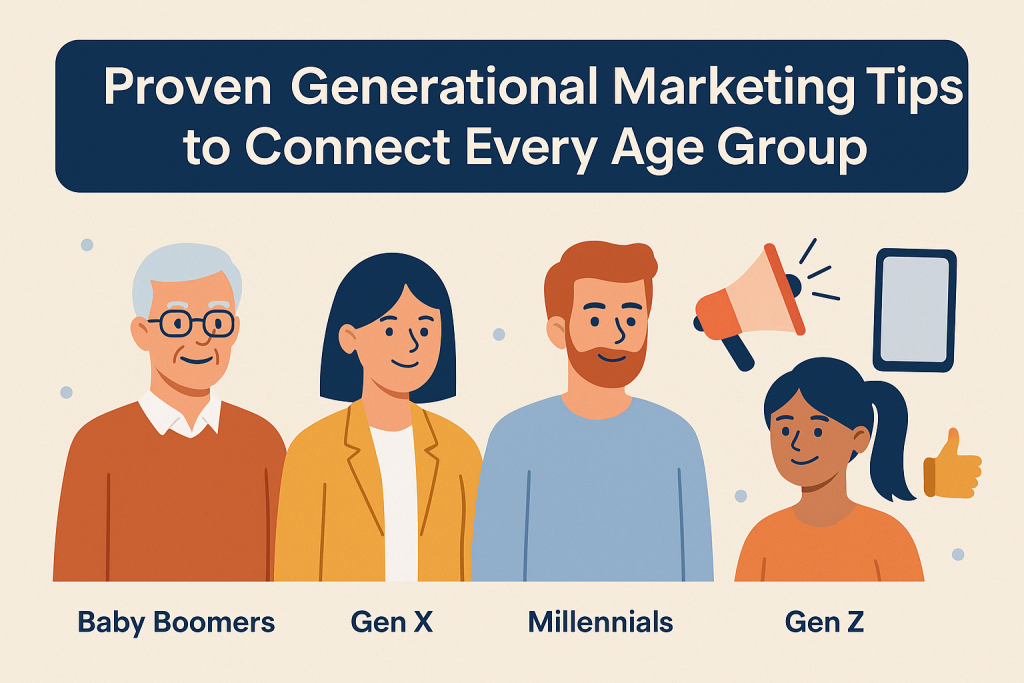
Reaching diverse age groups requires more than just knowing where they spend time online. It’s about understanding their values, communication preferences, and emotional triggers that influence purchasing decisions.
The following seven tips will help you create authentic, inclusive, and effective marketing strategies that resonate with every generation, from baby boomers to Gen Z.
Tip 1: Respect Traditional Channels While Embracing Digital for Generation X and Beyond
Generation X bridges the gap between traditional and digital marketing. They grew up with television, radio, and print but have fully embraced modern technology. Gen Xers appreciate email marketing campaigns, social media engagement, and informative blog posts, yet they still value the reliability of traditional advertising. To connect effectively, brands should combine both worlds by maintaining visibility through direct mail or in-person events while using digital tools for engagement.
This group values practicality and loyalty, making personalized customer service and reward-based programs especially impactful. By integrating traditional and digital channels, marketers can reach not only Gen X but also baby boomers who share similar media habits. A balanced approach ensures consistency, credibility, and trust across multiple generations.
Tip 2: Use Nostalgia to Create an Emotional Connection with Generation X (and Others)
Nostalgia is one of the most powerful emotional drivers in marketing. Gen Xers, in particular, respond strongly to familiar sounds, visuals, and pop culture moments from their youth. Whether it’s a retro ad creative, an old-school jingle, or a throwback product design, nostalgia reminds them of simpler times and creates an emotional bond with the brand.
Millennials also respond to nostalgia, often drawn to brands that revive trends from the 90s or early 2000s. Campaigns that mix vintage style with modern storytelling can attract audiences across age groups. The key is authenticity; nostalgia should complement your brand message, not replace it. When done right, it sparks positive memories, trust, and renewed interest in your brand.
Tip 3: Leverage User-Generated Content to Win Over Millennials
Millennials are highly influenced by peer opinions and online reviews. They are digital natives who prefer authentic stories over traditional ads. Encouraging user-generated content such as customer testimonials, product photos, or short form videos helps build credibility. Brands can motivate users to share experiences on social media, tag the company, or leave feedback in exchange for loyalty rewards.
This approach makes millennials feel involved and valued while offering social proof for potential customers. When users see real people sharing genuine experiences, they are more likely to trust your brand. User-generated content also strengthens your online community, boosting engagement and long-term loyalty among younger audiences.
Tip 4: Align Your Brand Values with Generation Z’s Expectations
Gen Z is a mobile-first generation known for being socially aware, inclusive, and tech savvy. They prefer brands that take a stand on issues like sustainability, diversity, and mental health. To attract Gen Z consumers, your brand must reflect these values in every aspect, from ad creative to influencer collaborations. They expect authenticity, transparency, and real-world action behind brand promises.
Video marketing and short form content work best for this generation. Quick, visually appealing storytelling allows you to connect faster and maintain attention. When brands communicate their purpose clearly and back it with genuine initiatives, they gain the loyalty of Gen Z and inspire trust among other generations as well.
Tip 5: Build an Authentic Presence on Emerging Platforms to Engage Younger Audiences
Social media platforms like TikTok, Instagram Reels, and YouTube Shorts are where most millennials and Gen Z spend their time. To reach these younger generations, brands must develop a robust social media strategy that blends creativity with authenticity. Rather than focusing only on polished ads, share behind-the-scenes content, customer stories, and trend-based videos that align with your brand’s tone.
Younger audiences prefer brands that participate in internet trends without forcing relevance. Visual storytelling and short form video content can humanize your brand and expand reach beyond your main demographic. Staying active on multiple platforms ensures consistent engagement and helps create lasting emotional connections across different age groups.
Tip 6: Co-Create with Influencers and Creators Across Generations
Influencer marketing remains one of the most effective ways to reach diverse audiences, but success depends on choosing the right voices. For Gen Z, micro or nano influencers are ideal because they prioritize authenticity and have strong, loyal communities. Millennials prefer influencers with expertise in specific niches such as lifestyle, business, or sustainability. Meanwhile, Gen Xers respond well to relatable figures or celebrities who share familiar values.
Co-creating campaigns allows influencers to present your brand naturally in their own voice. Encourage collaboration rather than scripted promotion. This approach creates trust and engagement while appealing to each generation’s preferred communication style. When done thoughtfully, influencer partnerships can bridge generational gaps and elevate brand perception across audiences.
Tip 7: Recognize Overlaps, Micro-Generations, and Shared Values
Although generational segmentation helps shape marketing strategies, it is essential to remember that no generation is entirely uniform. There are micro-generations, such as zillennials, who share traits from both millennials and Gen Z. Many values, like authenticity, convenience, and trust, overlap across age groups. Instead of isolating audiences by age, focus on shared motivations and emotional drivers.
Building inclusive campaigns that speak to shared experiences helps unify multiple generations under one brand message. Use a mix of traditional forms, digital marketing, and personalized outreach to ensure your message resonates broadly. Recognizing similarities while respecting differences leads to stronger relationships and long-term brand loyalty.
Final Thoughts: Building a Brand That Resonates Across All Ages
Generational marketing is not about separating audiences by age but about understanding what truly connects them. Every generation values authenticity, trust, and meaningful communication, even if they engage through different channels. Baby boomers might respond to detailed storytelling and personal service, while Gen Xers prefer practical offers and reliable communication. Millennials and Gen Z look for purpose-driven brands with strong social media engagement, creative storytelling, and seamless digital experiences.
The most effective generational marketing strategies blend traditional and digital approaches to create lasting relationships. Whether through video marketing, influencer collaborations, or email campaigns, your brand message should stay consistent and human across every touchpoint. When your marketing efforts honor both generational differences and shared values, you build loyalty that transcends time.
A brand that listens, adapts, and communicates with empathy can engage multiple generations at once, creating trust, recognition, and emotional connection that lasts for decades.