
Brand engagement is no longer something that sits only in marketing reports or social media dashboards. Today it shapes how people feel about your brand, how they interact with it, and how consistently your team represents it. When customers feel connected to a brand, they return more often, spend more, and recommend it to others. When employees feel connected to a brand, they deliver better work, communicate with more clarity, and create experiences that feel genuine and aligned.
What many companies forget is that these two forms of engagement are fully linked. A customer can only experience what a team understands and delivers. An employee can only represent what a brand clearly expresses. This shared relationship creates a simple truth. Strong brands grow from the inside and the outside at the same time.
This guide explores practical ways to increase brand engagement for both customers and employees with clear actions, real examples, and systems that help teams stay aligned as they scale.
Why Brands Need a Unified Engagement Approach
Customer engagement and employee engagement often get treated as two separate goals, but they rise and fall together. When your team understands the brand, believes in it, and feels proud to represent it, customers naturally feel that energy in every interaction. When customers respond positively, employees feel more motivated, connected, and confident in the work they do.
A unified engagement approach creates consistency across your entire brand experience. Your visuals, your voice, your service, and your internal culture begin to move in the same direction. This alignment reduces confusion, strengthens trust, and helps teams make decisions that support your brand every day. It also ensures that customers receive the same quality of experience wherever they meet your brand, whether on your website, in a social post, or through a support conversation.
Strong engagement inside your company becomes the foundation for strong engagement outside it. When both sides work together, your brand grows with more stability, authenticity, and long term loyalty.
Building Internal Brand Engagement for Employees
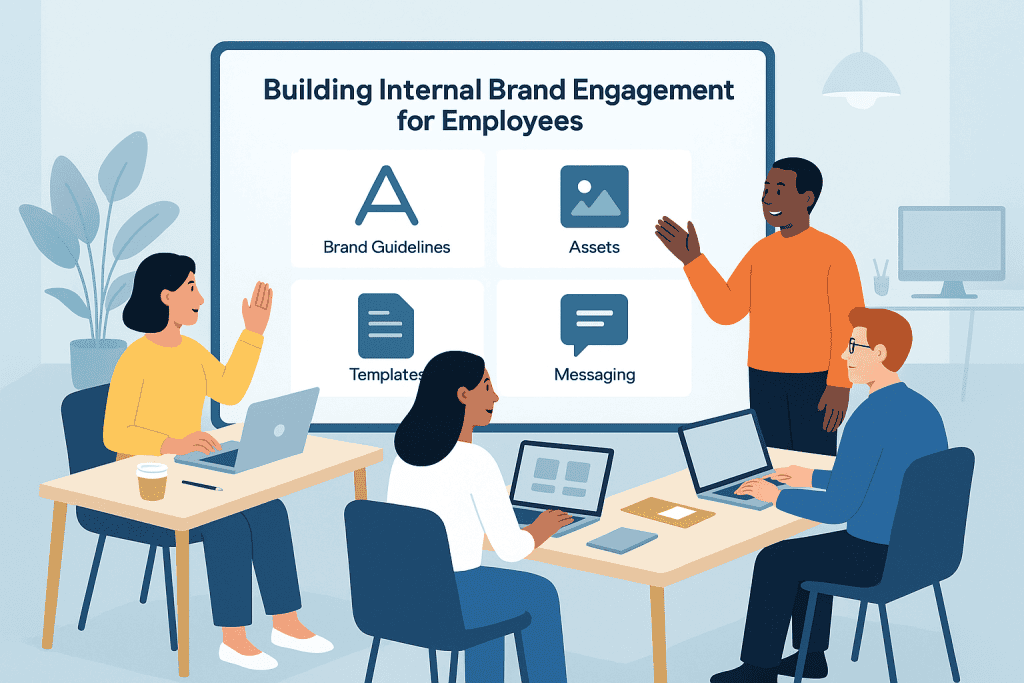
Employees represent the brand long before customers experience it. When your team understands your identity, uses your assets correctly, and feels emotionally connected to your mission, internal engagement becomes one of your strongest advantages.
Great brands start engagement at the source. When employees feel informed and included, they naturally become confident leaders of your brand experience.
Give Every Employee Clear Access to Brand Knowledge
Employees cannot engage with a brand they cannot see or understand. Clear access to brand guidelines, visual assets, templates, tone examples, and approved resources makes every team member feel more aligned and supported in their daily work. When your entire organisation knows where to find the latest files and how to use them, brand consistency rises and mistakes drop.
A central brand portal helps reduce confusion that usually comes from scattered folders or outdated links. Instead of searching across multiple systems, teams can instantly locate what they need, follow documented rules, and create assets that match the identity of the brand. This direct access builds confidence, ownership, and faster decision making.
It also encourages participation from people outside the design or marketing teams. When the brand becomes easy to understand and apply, employees feel comfortable creating presentations, social visuals, or internal documents that stay true to the identity of your organisation. Over time, this daily involvement strengthens internal brand engagement and builds a culture that values consistency.
Foster a Culture of Purpose and Meaningful Values
People are naturally more engaged when they feel connected to something bigger than their daily tasks. Purpose gives employees direction, and values guide the way they work, collaborate, and make decisions. When these elements are clear and practiced across the organisation, teams feel more inspired and committed to representing the brand with integrity.
To build this connection, start by communicating your values in simple and practical ways. Share them during hiring, reinforce them in onboarding, and highlight them in everyday conversations. Employees should see these values reflected in leadership behaviour, company policies, recognition programs, and the choices your brand makes in the market.
When values feel authentic, they influence how teams respond to challenges, how they communicate with customers, and how they shape their work. A values driven environment not only attracts people who believe in the same mission but also keeps them engaged and motivated in the long run. This sense of shared purpose becomes a powerful driver of internal brand loyalty and helps employees feel proud of the brand they represent.
Create Pathways for Learning, Skill Growth, and Internal Expertise
Employees stay more engaged when they feel they are growing with the brand rather than simply working for it. Learning opportunities signal that the organisation values their development and wants them to succeed in their roles. This creates a deeper emotional connection and encourages long term commitment.
A strong learning culture starts with accessible training. Offer sessions that help teams understand the brand, master tools, improve communication, and strengthen their craft. Micro learning modules, recorded workshops, and short internal courses allow employees to learn at their own pace without disrupting daily responsibilities. This flexibility helps everyone stay consistent with new updates and evolving standards.
Encouraging internal experts to share their knowledge also boosts engagement. When employees teach others through internal masterclasses or documented guides, they feel recognised and valued. It also helps build a more knowledgeable workforce that can represent the brand with confidence. As skills grow, teams make better decisions, create stronger work, and contribute more meaningfully to the brand’s overall identity.
Invite Employees to Participate in Brand Storytelling
Employees feel more connected to a brand when they see their own stories reflected in it. Inviting them to contribute to brand narratives creates a sense of pride, ownership, and identity. When people feel seen and valued, they naturally become stronger advocates of the organisation.
Start by creating opportunities for employees to share their experiences. This could include team spotlights, interview style posts, cultural moments, project highlights, or behind the scenes stories from different departments. When the brand celebrates real voices, it builds an internal environment where individuals feel recognised and included.
Encouraging employee generated content also strengthens authenticity. Teams can contribute ideas for social posts, internal campaigns, newsletters, or thought leadership pieces. These contributions show the human side of your organisation and help customers connect with your brand on a deeper level.
As employees become part of the storytelling process, they begin to understand the brand’s message more clearly. They communicate it with confidence and consistency, both internally and externally. This involvement turns them into long term ambassadors who help the brand feel more relatable and trustworthy.
Build Recognition Systems That Reward Brand Aligned Behaviour
Recognition has a powerful effect on how engaged employees feel. When people see their efforts appreciated, they develop a stronger emotional connection to the brand and feel more motivated to contribute. Recognising brand aligned behaviour reinforces the habits, actions, and decisions that support your identity and values.
Start by identifying the types of behaviour you want to encourage. This could include creative work that follows brand guidelines, customer interactions that reflect brand tone, or internal contributions that improve collaboration and consistency. When these moments are highlighted, employees understand what good brand behaviour looks like and feel encouraged to replicate it.
Recognition can take many forms. Public appreciation in team meetings, spotlight features on internal platforms, simple notes of gratitude, or monthly awards all build a positive environment. These gestures make employees feel valued and help them see their direct impact on the brand’s success.
Over time, a recognition system builds a culture where people take pride in their work and actively protect the brand. When employees know their contributions matter, they engage more deeply, communicate more clearly, and help create a stronger brand experience for customers.
Elevating External Brand Engagement for Customers
Customer engagement grows when people recognise your brand, understand your personality, and feel that your experiences match their expectations. The more consistently your brand shows up, the easier it becomes for customers to trust you and stay connected over time.
Create Memorable Customer Experiences Across All Touchpoints
Customer engagement begins with the experience your brand creates across every touchpoint. When people move from your website to your emails, social platforms, packaging, or physical environment, they should feel the same personality and quality at every step. This consistency reassures them that your brand is reliable and intentional in how it communicates.
Strong brand experiences rely on clarity, design, and tone. Clear messaging helps customers understand what you offer. Thoughtful design builds familiarity. A consistent tone makes your communication feel human and predictable. When these elements come together, customers start trusting your brand without hesitation.
Think of every page, post, or product as a moment that shapes perception. When customers feel understood and see the same identity across channels, they become more confident in their connection to your brand. Over time, this consistency transforms one time buyers into long term supporters who look forward to engaging with every touchpoint.
Use Storytelling to Build Emotional Connection
Stories make brands memorable because they help customers understand the people, purpose, and passion behind the work. When a brand tells stories with authenticity, it becomes more relatable and easier to trust. Customers connect with emotions, not just products or features.
Share real customer experiences that highlight impact and transformation. Feature behind the scenes content that reveals how your team works or how products are created. Founder narratives help customers understand the origin of your mission and the values that guide your decisions. Product journeys show how ideas evolve into solutions that customers rely on.
Storytelling builds a deeper emotional bond because it shows your brand as a living experience rather than a static identity. People remember stories long after they forget ads or promotions. When stories reflect genuine moments, customers feel closer to your brand and develop a stronger desire to engage, share, and return.
Encourage User Generated Content Through Community First Engagement
User generated content is one of the most powerful ways to increase customer engagement because it turns your audience into active contributors. When people share photos, videos, or reviews about your brand, they express real experiences that feel more trustworthy than traditional marketing.
Encourage participation by creating simple and fun ways for customers to share. Contests, themed challenges, and branded hashtags can motivate your audience to post content. Highlight user stories through social features, testimonial highlights, or community showcases. When customers see their content celebrated, they feel valued and more likely to participate again.
UGC also acts as social proof. When new customers see real people enjoying your products, they build confidence in your brand. This credibility leads to higher interest, more purchases, and stronger loyalty. A community first approach helps customers feel like they belong to something meaningful rather than just interacting with a business.
Build Active Conversations Through Social Interactions
Social platforms remain one of the most effective places to build customer engagement because they allow direct and immediate interaction. A brand that responds, listens, and participates feels more human and approachable. Customers are more likely to engage when they know someone on the other side cares about their voice.
Replies, comments, and reactions help create a dialogue rather than a one way broadcast. Ask thoughtful questions related to customer interests, challenges, or aspirations. Create recurring engagement rituals like weekly prompts, polls, or quick check in posts. These interactions make your brand feel lively and responsive.
Small gestures, such as thanking users for feedback or acknowledging creative posts, go a long way in building trust. When customers notice that your brand responds consistently, they become more confident in engaging. This ongoing conversation shapes long term relationships and increases your visibility on social platforms.
Strengthen Trust with Supportive Customer Service
Customer service is often the moment that defines whether someone stays engaged with your brand or walks away. Support interactions shape perception because they show how your brand behaves when problems arise. Clear communication, patience, and transparency help customers feel understood and respected.
Make the process simple by offering easy ways to reach support, clear return or exchange guidelines, and straightforward explanations when issues occur. A friendly tone, quick response time, and helpful instructions reflect genuine care. Customers are more likely to stay loyal when they know your brand will take responsibility and offer practical solutions.
Proactive support also boosts engagement. Anticipate common questions, provide helpful resources, and check in with customers after their purchase when possible. These small acts build trust and turn routine interactions into meaningful connections. When customers feel supported, they stay engaged and develop long lasting confidence in your brand.
How to Align Employee and Customer Engagement for Stronger Brand Outcomes
Brands grow faster when internal engagement and external engagement move in the same direction. Employees shape the experiences customers receive, while customers influence the motivation and pride employees feel. When these two areas work together, your brand becomes more consistent, more trusted, and more resilient.
Alignment begins with a shared understanding of the brand. Employees should know the values, tone, visual identity, promises, and expectations that define your brand. When teams follow the same playbook, customers enjoy clear and predictable interactions. This consistency makes customers feel safe choosing your brand again and again.
Customer insights should also flow back to your internal culture. Use feedback, reviews, and behaviour trends to refine your messaging, improve your product, or guide training. When employees see how their work impacts real people, they feel more engaged and connected to the brand’s mission.
A unified approach turns employees into advocates and customers into loyal supporters. It creates a cycle where great internal culture leads to great customer experiences, which then reinforces a stronger internal culture. This alignment is one of the most powerful drivers of sustainable brand engagement.
Tools and Systems That Support Engagement Across Teams
Technology plays a key role in helping brands stay consistent, connected, and easy to navigate. When teams have the right systems, they work with more clarity, follow brand rules effortlessly, and create experiences that feel unified from the inside out.
Strong tools reduce friction, remove guesswork, and help everyone participate in building a brand that feels reliable and well organised.
Centralised Brand Portals for Easy Access and Daily Use
A central brand portal is one of the most effective tools for building engagement because it gives employees a single, trusted place to find everything they need. When brand assets, templates, guidelines, messaging frameworks, and creative rules live together in one organised hub, teams feel more confident and make fewer errors.
This level of clarity is especially important for companies that move fast or work across multiple locations. A central portal ensures that everyone stays updated, aligned, and capable of producing work that reflects the brand accurately. It also encourages more employees to participate in brand building since the resources are easy to understand and ready to use.
A well organised portal also improves cross team collaboration. Designers, marketers, product managers, and support teams can all work from the same source of truth. This reduces inconsistencies and helps the brand feel more unified in every customer facing moment.
Training Platforms and Knowledge Libraries for Skill Growth
Continuous learning strengthens engagement because it gives employees the skills they need to represent the brand with confidence. Training platforms or knowledge libraries make this process simple by offering structured access to lessons, guidelines, reference materials, and recorded sessions.
These systems create an environment where people can learn at their own pace while staying aligned with brand expectations. They also help new employees onboard faster and understand the brand’s identity from the very beginning. When learning becomes part of the culture, teams develop a deeper sense of belonging and pride.
Knowledge libraries also preserve valuable internal insights. When best practices and expert contributions are documented, employees feel supported and equipped to make better decisions. This creates a cycle where strong knowledge leads to stronger engagement, and stronger engagement leads to more consistent brand outcomes.
Analytics Tools to Track Engagement and Identify Gaps
Measurement is essential for improving both customer and employee engagement. Analytics tools help you understand what is working, what needs improvement, and where your brand can make smarter decisions.
For customers, analytics reveal how people interact with your website, social platforms, and content. Metrics such as clicks, comments, shares, time spent, or branded keyword searches show how engaged your audience is. These insights help shape future campaigns and improve customer experience.
For employees, internal analytics track how often brand materials are used, which templates get the most adoption, and how well teams follow guidelines. This helps identify areas where more clarity or training may be needed.
With clear data, brands can refine their strategies and strengthen the connection between internal efforts and external results. Analytics turn engagement from a guess into an ongoing, trackable practice.
How Brandy Helps Teams Improve Brand Engagement

Stronger engagement begins with clarity, and Brandy gives teams the structure they need to stay aligned every day. When all brand assets, guidelines, templates, and messaging foundations live in one organised space, everyone can work confidently without second guessing the latest version or searching across scattered folders.
Brandy makes it easy for teams to follow the brand with simple access, intuitive navigation, and ready to use templates that help people create on brand work in less time. This encourages participation from every department, not just design or marketing. When employees understand the brand and can apply it effortlessly, internal engagement rises across the organisation.
Consistent brand behaviour also leads to stronger external engagement. Customers receive the same voice, visuals, and experience across channels because the team behind the scenes is aligned. With Brandy, brands build smoother workflows, better collaboration, and a shared identity that grows stronger as the company scales.
Forward Look at Brand Engagement
Brand engagement grows when teams stay connected to a clear identity and customers consistently experience that identity in every interaction. It is a long term practice shaped by culture, communication, and systems that bring clarity to daily work. When employees feel valued and understand the brand, they naturally deliver experiences that customers trust. When customers respond with loyalty and enthusiasm, employees feel more motivated and aligned.
Strong engagement is not built through one campaign. It is built through repeated actions that reinforce your values, your story, and your commitment to consistency. As brands grow, the connection between internal teams and external audiences becomes even more important. With the right tools and a clear approach, engagement becomes a natural part of how your brand operates and evolves.