
Enterprise teams create and manage thousands of digital assets every day. From global marketing campaigns and product launches to sales enablement materials and internal resources, the volume of content grows at a pace that traditional storage systems cannot handle. Files live across shared drives, cloud folders, emails, and personal desktops. Over time this creates confusion, slows down production, and weakens brand consistency.
As organizations scale, asset management becomes more than just storage. Teams need control over who can access content, which versions remain active, and how assets move from creation to publication. Without a structured system, enterprises face duplicated work, security risks, inconsistent branding across regions, and costly delays in campaign execution.
Enterprise digital asset management steps in to solve this complexity. It provides a centralized, secure, and scalable environment where assets stay organized, approved, and accessible to global teams at all times. Instead of reacting to asset chaos, enterprises gain a clear, governed system that supports both speed and brand integrity.
What Is Enterprise Digital Asset Management
Enterprise digital asset management is a centralized system that large organizations use to store, organize, control, and distribute their digital content at scale. It manages everything from brand logos and marketing visuals to videos, templates, documents, and campaign assets across multiple teams, locations, and business units.
Unlike simple file storage, enterprise DAM does much more than hold files. It applies structure through metadata, permissions, version control, and approval workflows. This allows enterprises to manage thousands or even millions of assets without losing visibility or control. Every user knows where to find the latest approved content and how it can be used.
Enterprise DAM also supports governance and compliance. It protects sensitive assets with advanced security controls, tracks asset usage across channels, and maintains historical records for auditing and legal needs. This level of control becomes essential for organizations that operate across regions, industries, and regulatory environments.
At its core, enterprise digital asset management turns scattered digital content into a governed, searchable, and scalable asset ecosystem that supports brand consistency, operational efficiency, and long term growth.
How Enterprise Digital Asset Management Differs From Regular DAM
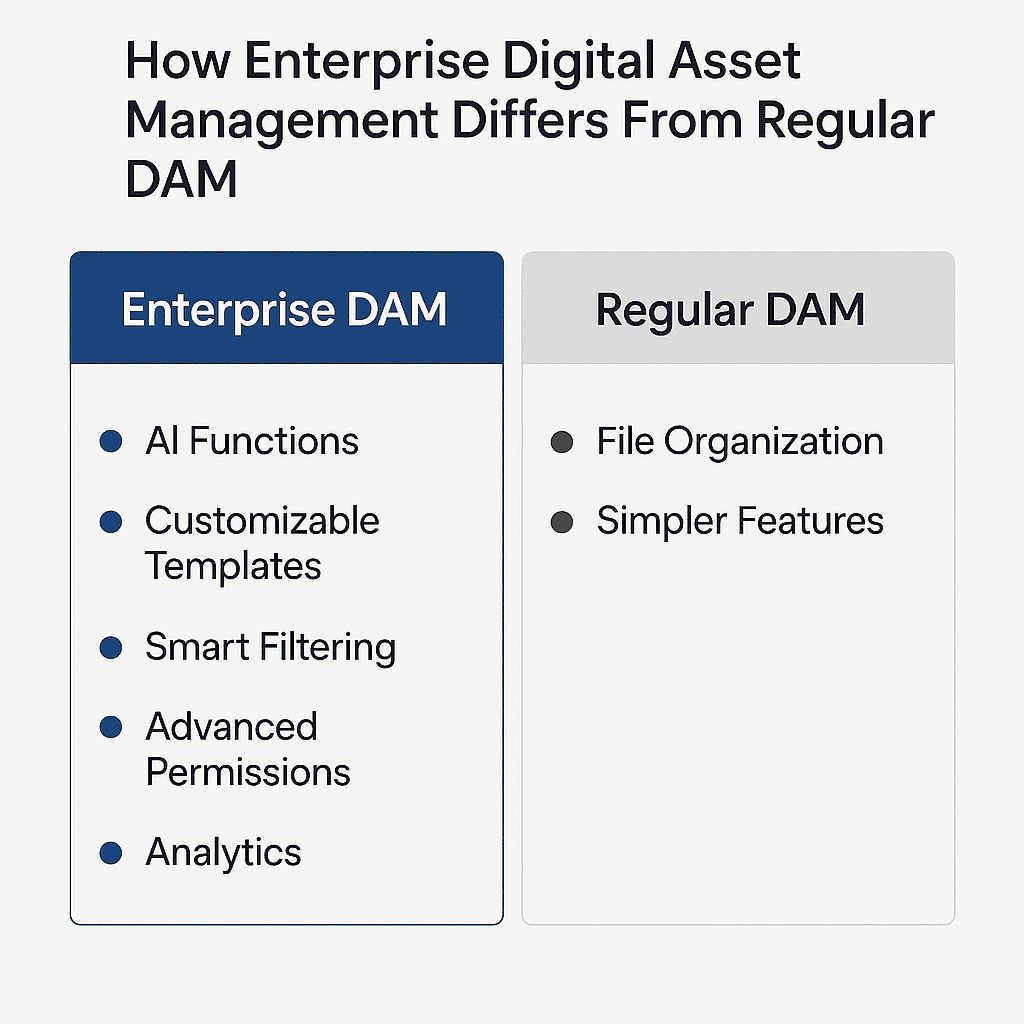
Enterprise digital asset management goes far beyond simple digital storage or entry level DAM platforms. While regular DAM systems help small teams organize files, enterprise DAM platforms support complex organizations with global teams, strict governance needs, and high asset volumes. The difference lies in scale, depth, control, and integration power.
Scale and Performance Differences
Regular DAM systems work well for small libraries with limited users. Enterprise DAM systems handle massive volumes of high resolution images, videos, brand templates, and documents across multiple regions and departments. They support thousands of users accessing assets simultaneously without performance issues. Enterprises also rely on multi brand and multi region support that basic DAM tools cannot manage efficiently.
Governance and Compliance Capabilities
Enterprise DAM platforms enforce strict governance. Teams control who can view, edit, approve, and distribute assets through detailed permission structures. The system tracks every activity through audit trails and version history. This level of governance supports legal compliance, brand protection, and regulatory requirements that standard DAM platforms rarely cover in depth.
Advanced Automation and AI Features
Enterprise DAM systems use automation and artificial intelligence to speed up operations. AI assists with smart tagging, content recognition, duplicate detection, and automated routing. These advanced capabilities reduce manual workload and help teams manage growing asset libraries with accuracy and speed. Regular DAM systems usually rely on manual processes for these tasks.
Enterprise Integrations and Customization
Enterprise organizations depend on deep integrations across their technology ecosystem. DAM platforms connect with content management systems, design tools, marketing automation platforms, project management software, and analytics tools. Teams customize workflows, metadata structures, and permissions to match their exact operational needs. Standard DAM tools often offer limited integration and customization options.
Why Enterprises Are Adopting Digital Asset Management Platforms
Enterprises adopt digital asset management platforms because traditional storage methods cannot keep up with the speed, scale, and complexity of modern content operations. As brands expand across markets and teams grow more distributed, DAM becomes a strategic system that supports both daily execution and long term brand control.
Centralized Access to Brand Assets Globally
Enterprises operate across regions, time zones, and business units. A centralized DAM provides one trusted location where every approved asset lives. Teams no longer waste time searching across drives or requesting files through email. Everyone accesses the same up to date content, which reduces delays and eliminates the risk of using outdated materials.
Strong Collaboration and Streamlined Workflows
Large organizations involve many stakeholders in content creation. DAM platforms connect designers, marketers, reviewers, legal teams, and partners within one structured workflow. Teams share feedback, track revisions, and complete approvals directly inside the system. This removes communication gaps and keeps campaigns moving without friction.
Consistent Brand Identity Across All Touchpoints
Brand consistency becomes difficult when multiple teams create content independently. Enterprise DAM platforms protect brand identity by linking approved assets with brand guidelines and usage rules. Teams replace outdated visuals with current materials and ensure that every campaign follows the same visual and messaging standards across regions and channels.
Scalable and Flexible Asset Management
Enterprises grow through new product lines, global launches, acquisitions, and rebrands. DAM platforms scale with these changes by supporting multi brand structures, regional asset variations, and expanding user bases. Teams manage growth without adding complexity to daily workflows.
Analytics and Usage Insights for Better Decisions
Enterprise DAM platforms provide visibility into how teams use assets. Leaders track which assets perform best, which templates teams adopt, and where gaps appear. These insights help marketing and brand teams refine content strategies, improve resource allocation, and make data informed decisions instead of relying on assumptions.
Key Features of Enterprise Digital Asset Management Software
Enterprise digital asset management software includes advanced capabilities that help large organizations control content, protect brand integrity, and scale operations smoothly. These features support daily workflows as well as long term governance and growth.
Centralized Asset Library:
Stores all brand assets, marketing creatives, videos, documents, and templates in one secure and unified location for global access.
Advanced Metadata Management
Allows detailed tagging by campaign, region, product, language, usage rights, and expiration to improve search accuracy and organization.
Granular Permissions and User Roles:
Controls who can view, upload, edit, approve, and distribute assets across departments and external partners.
Approval and Review Workflows:
Supports structured content reviews with brand, legal, and leadership teams inside the system.
Automation Rules and Notifications:
Routes assets to the right reviewers, alerts stakeholders for action, and advances files automatically after approvals.
Powerful Search and Filtering Tools:
Helps users find assets quickly using metadata, file type, language, project, or usage rights.
Version Control and Asset History:
Tracks every revision, prevents outdated file use, and allows easy rollback when needed.
Archiving and Retention Policies:
Moves inactive or expired assets out of active use while preserving historical records for compliance.
Integrations With Creative and Marketing Tools:
Connects with design software, CMS platforms, marketing automation tools, and cloud storage systems.
Analytics and Reporting Dashboards:
Provides insights into asset usage, adoption rates, and content performance across teams and regions.
Common Challenges Enterprises Face Without a DAM System
When enterprises operate without a digital asset management system, content quickly becomes difficult to control and even harder to scale. As asset volumes grow and teams spread across regions, small inefficiencies turn into major operational and brand risks.
Scattered Assets Across Departments:
Teams store assets across shared drives, personal folders, emails, and cloud tools. This fragmentation makes it hard to locate the correct file when it is needed most.
Inconsistent Brand Usage Across Markets:
Without a central source of truth, different teams use outdated logos, visuals, and templates. This weakens brand identity and creates confusion across customer touchpoints.
Slow Approvals and Production Delays:
Manual review processes cause bottlenecks. Assets sit in inboxes waiting for feedback while campaigns miss deadlines and momentum.
Duplicate Asset Creation:
When teams cannot find existing content, they recreate assets that already exist. This wastes time, budget, and creative resources.
Security and Compliance Risks:
Sensitive brand assets remain exposed without proper access controls. Unauthorized usage, licensing violations, and data leaks become real threats.
Limited Visibility Into Asset Performance:
Without analytics, leaders lack insight into which assets teams actually use or which content delivers results. Decisions rely on assumptions instead of data.
How to Choose the Right Enterprise Digital Asset Management Software
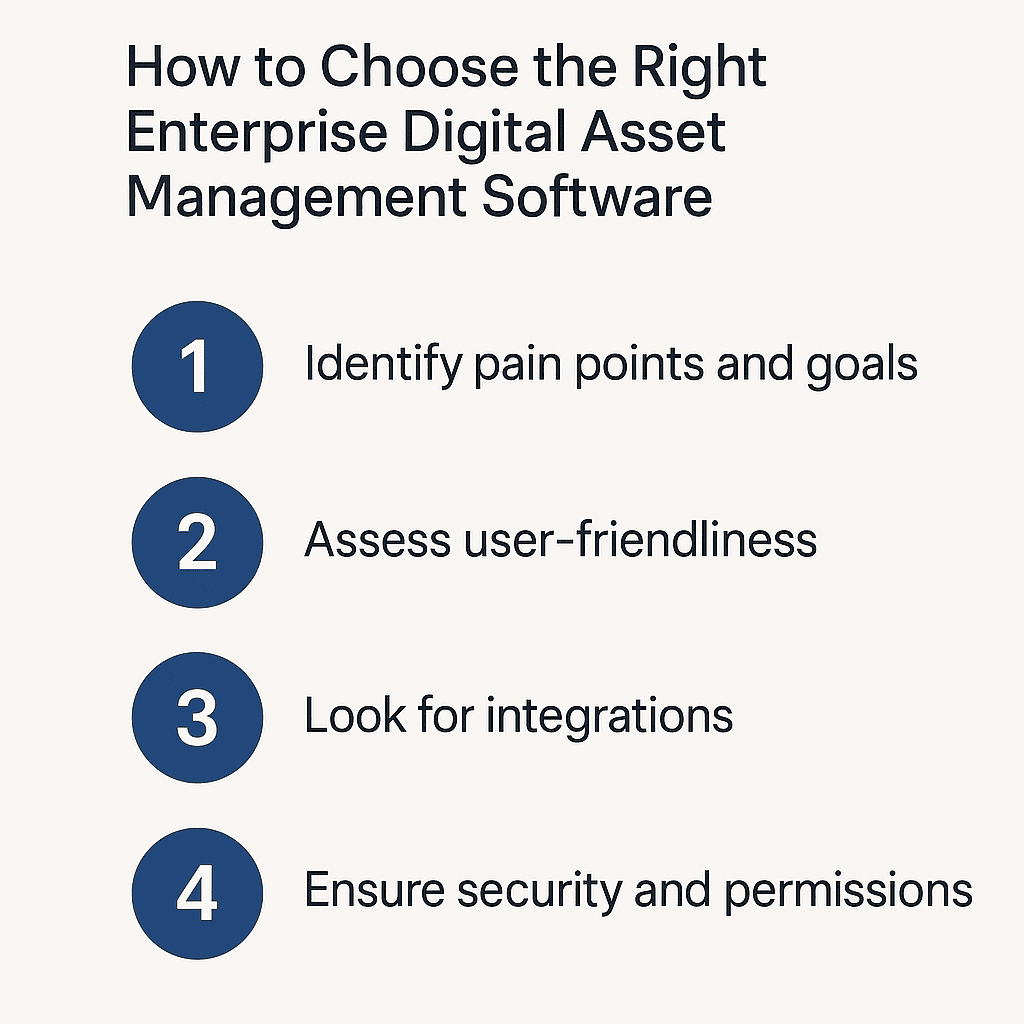
Choosing the right enterprise digital asset management software plays a long term role in how efficiently your teams work and how consistently your brand shows up across markets. Every organization has different needs, but a structured evaluation process helps you select a platform that supports both your current goals and future growth.
Identify Your Organization Pain Points and Goals
Start by clearly defining what problems your teams face today. These may include inconsistent branding, slow approvals, scattered asset storage, limited collaboration, or lack of visibility into asset usage. Once you understand the challenges, set clear business goals such as faster campaign launches, better brand compliance, or improved cross team collaboration. Matching these goals with platform capabilities helps narrow down the right solutions.
Evaluate Ease of Use and Adoption
Even the most powerful DAM system fails if teams struggle to use it. Look for a platform with an intuitive interface that both designers and non designers can navigate easily. Strong onboarding support, guided training, and simple upload and search experiences increase adoption and ensure teams actually use the system in daily work.
Look for Integrations With Your Existing Tech Stack
Your DAM should connect seamlessly with the tools your teams already use. This includes design software, content management systems, marketing automation platforms, project management tools, and cloud storage. Deep integrations reduce manual work, prevent data silos, and keep asset workflows flowing smoothly across the organization.
Ensure Enterprise Grade Security and Permissions
Security becomes critical at enterprise scale. Choose a DAM platform that offers role based permissions, restricted access for external users, activity logs, and secure authentication options. Strong security controls protect sensitive brand assets and help meet compliance requirements across regions and industries.
Consider Scalability and Long Term Growth
Enterprise DAM software must grow with your organization. Look for platforms that support multi brand structures, regional asset variations, high user counts, and expanding storage needs. A scalable DAM prevents costly migrations later and ensures your content operations stay stable as the business evolves.
Enterprise Digital Asset Management Use Cases by Department
Enterprise digital asset management systems support nearly every department that creates, manages, or uses branded content. Each team interacts with assets in a different way, but all of them rely on a shared source of truth to stay aligned, efficient, and compliant.
Marketing Teams
Marketing teams use enterprise DAM to manage campaign creatives, social media assets, advertisements, landing page visuals, and promotional materials across regions. They pull only approved assets, launch campaigns faster, and maintain consistent branding across every channel without chasing files or recreating content.
Creative and Design Teams
Design teams depend on DAM systems to store working files, collect feedback, manage revisions, and publish final assets. They track versions, receive centralized review comments, and avoid confusion caused by multiple file copies. This keeps creative production organized and reduces unnecessary rework.
Sales Enablement Teams
Sales teams access presentations, brochures, pitch decks, product visuals, and case studies directly from the DAM. They always share the latest approved materials with prospects, which improves brand trust and speeds up deal cycles without relying on outdated local folders.
Legal and Compliance Teams
Legal teams use enterprise DAM to review licensing terms, usage rights, and regulatory approvals before assets reach public channels. They monitor asset expiration dates, control distribution rights, and protect the organization from misuse or compliance violations.
Regional and Franchise Teams
Regional and franchise teams use global assets while adapting them for local markets. Enterprise DAM systems allow headquarters to control core branding while giving local teams access to region specific templates, languages, and campaigns without breaking brand standards.
How Enterprise DAM Supports AI Driven Workflows
Artificial intelligence has become a powerful layer within modern enterprise digital asset management systems. Instead of relying only on manual processes, teams now use AI to speed up organization, improve discovery, and reduce repetitive work across asset operations.
AI powered tagging automatically analyzes images, videos, and documents as they enter the system. It detects objects, text, faces, colors, and themes, then applies accurate metadata without manual input. This dramatically reduces the time teams spend on tagging while improving search accuracy across large libraries.
Smart search uses AI to understand intent, not just keywords. Teams can search using natural language or visual similarity. The system retrieves relevant assets even when users do not know the exact file name or tag. This makes asset discovery faster for both technical and non technical users.
Personalized recommendations improve daily workflows. AI suggests relevant assets based on past usage, project context, or role. Marketers discover high performing creatives more easily, and designers reuse proven templates instead of starting from scratch.
Automated quality checks and compliance support help enterprises maintain brand standards. AI can flag low resolution files, off brand colors, expired licenses, or outdated templates before assets reach distribution channels.
Together, these AI driven capabilities turn enterprise DAM into an intelligent content engine that supports speed, accuracy, and smarter decision making at scale.
Enterprise Digital Asset Management Implementation Best Practices
Implementing an enterprise digital asset management system is not just a technical project. It is a change in how teams create, store, access, and govern content across the organization. Following best practices during implementation ensures faster adoption, fewer disruptions, and long term success.
Align Key Stakeholders From the Start
Successful implementation begins with alignment across marketing, creative, IT, legal, and leadership teams. Each group brings different requirements around security, workflows, compliance, and daily usage. Early alignment prevents conflicts later and ensures the DAM supports real operational needs.
Standardize Metadata and Naming Conventions
Metadata consistency determines how usable your DAM becomes over time. Define clear rules for tagging, naming, and categorization before migration begins. When every asset follows the same structure, teams find content faster and automation works more reliably.
Design Permissions and Access Carefully
Not every user needs the same level of access. Define who can view, upload, edit, approve, and distribute assets. Strong permission design protects sensitive files while still enabling smooth collaboration across departments and with external partners.
Map Workflows Before Automating
Automation delivers the most value when it reflects how teams actually work. Map current content workflows in detail before building them into the DAM. Identify approval stages, review cycles, and publishing paths so automation supports real business processes.
Plan Training and Adoption Programs
Even the best DAM platform fails without user adoption. Provide hands on training, role specific guides, and ongoing support. Encourage early adoption through internal champions who help teams integrate the system into daily work.
Optimize and Improve Continuously
Enterprise DAM implementation does not end at launch. Monitor usage patterns, feedback, and performance data. Refine metadata, permissions, workflows, and integrations regularly to keep the system aligned with evolving business needs.
Final Thoughts on Investing in Enterprise Digital Asset Management
Enterprise digital asset management has become a foundational system for modern organizations that operate at scale. As content volumes grow and teams spread across regions and functions, managing assets without structure creates risk, inefficiency, and brand inconsistency. A strong enterprise DAM replaces scattered storage with a governed, searchable, and secure environment where every asset follows clear rules.
Beyond improving daily workflows, enterprise DAM supports long term brand health. It protects intellectual property, enforces brand standards, improves collaboration across departments, and provides data driven insights that help leaders make better decisions. As artificial intelligence and automation continue to reshape content operations, enterprise DAM will only grow in strategic importance.
Investing in the right DAM platform is not just a technology upgrade. It is an investment in operational clarity, brand consistency, and sustainable growth.