
Anyone who has been part of a rebrand knows it is rarely just about changing a logo or refreshing colors. A rebrand touches every part of an organization. Strategy shifts. Teams realign. Assets multiply. Expectations rise. All of this happens while the business still needs to operate without disruption.
Done well, a rebrand can sharpen positioning, rebuild relevance, and unlock growth. Done poorly, it creates confusion, inconsistency, and long lasting damage to trust. The difference between the two outcomes is rarely creative talent alone. It comes down to structure, systems, and the tools that support execution.
Modern rebrands are operational projects as much as creative ones. They involve dozens of stakeholders, hundreds or thousands of assets, and multiple channels that must move in sync. Without the right technology, even the strongest brand vision breaks down under pressure.
This guide breaks down the most important tools and technologies you need to manage a rebrand successfully. These are not trend driven tools. They are foundational systems that help you move faster, stay consistent, and protect your brand long after launch.
What a Successful Rebrand Actually Requires Today
A successful rebrand is no longer defined by how good the new logo looks on launch day. It is defined by how well the new identity is adopted, applied, and maintained over time.
Rebranding Is No Longer Just a Visual Update
Brands today exist across websites, apps, social platforms, campaigns, internal documents, partner materials, and physical spaces. A rebrand must touch all of these surfaces without creating fragmentation. That requires more than design skills. It requires systems that can manage complexity at scale.
Why Tools Matter More Than Talent Alone
Talented designers and marketers are essential, but without the right tools they are forced to rely on manual processes, scattered files, and tribal knowledge. This leads to duplicated work, outdated assets resurfacing, and slow rollouts. Tools create structure so teams can focus on quality rather than damage control.
Where Most Rebrands Go Wrong
Most rebrands fail after launch. Old logos creep back into circulation. Teams interpret guidelines differently. External partners use incorrect assets. These issues are not caused by poor strategy. They are caused by a lack of centralized systems that govern brand execution.
The Core Stages of a Successful Rebrand

Before diving into specific tools, it helps to understand the stages where they support the process most effectively.
Strategy and Discovery
This stage focuses on audits, research, audience insight, and competitive positioning. Decisions made here shape everything that follows.
Creation and Alignment
Design systems, messaging, and assets are developed and approved. Internal alignment becomes critical as teams prepare for rollout.
Activation and Rollout
The new brand is introduced across channels, regions, and teams. Coordination and timing matter as much as creativity.
Governance and Long Term Brand Control
After launch, the real work begins. Brands need systems to protect consistency, manage updates, and support growth.
Top Rebranding Tools and Technologies to Power a Successful Rebrand
Rebranding is not a creative exercise alone. It is a coordinated operational effort that requires structure, visibility, and control. The following tools help teams manage complexity, protect consistency, and execute rebrands with confidence at scale.
1. Digital Asset Management Systems

If there is one tool that should sit at the foundation of any rebrand, it is Digital Asset Management.
A DAM system acts as the single source of truth for every approved brand asset. Logos, images, videos, templates, documents, and campaign files live in one controlled environment. This eliminates confusion about which version is correct and ensures teams always work with up to date materials.
Why DAM Should Be the First Tool You Choose
During a rebrand, asset volume explodes. New versions are created rapidly while old assets still exist across folders, drives, and inboxes. Without a DAM, teams rely on memory and manual policing. That approach does not scale.
A DAM gives structure to chaos. It replaces scattered storage with controlled access and clear ownership.
How DAM Supports Rebrands at Scale
Modern DAM systems like Brandy support permissions, approvals, version history, and usage rules. Teams can restrict access to outdated assets, automate updates, and ensure only approved files are available. This is especially critical for global brands with multiple markets and partners.
Example Use Case
A global company rolling out a new identity across regions uses a DAM to instantly replace old logos with approved versions. Local teams download the correct files without manual coordination, preventing inconsistencies from day one.
2. Brand Portals and Brand Hubs
While a DAM manages assets, a brand portal manages understanding.
A brand portal brings together guidelines, rules, examples, and education in one accessible space. It becomes the reference point for how the brand should look, sound, and behave.
Centralizing Brand Guidelines and Rules
Brand guidelines buried in PDFs or slide decks quickly become outdated or ignored. A brand portal keeps guidance living and visible. Updates are reflected instantly, reducing misinterpretation and misuse.
Supporting Internal and External Teams
Agencies, partners, and regional teams need clarity. A brand portal removes friction by giving everyone access to the same source of truth, regardless of location or role.
Example Use Case
After a rebrand, a company launches a brand portal that includes visual guidelines, tone of voice examples, and downloadable assets. New employees and partners can align with the brand without training sessions or manual onboarding.
3. Market Research and Brand Insight Tools
Strong rebrands start with evidence, not assumptions. Market research tools provide the insight needed to guide decisions with confidence.
Understanding Audience Perception
Brand perception studies, surveys, and sentiment analysis reveal how audiences currently see your brand and where expectations are shifting. This helps define what needs to change and what should remain familiar.
Competitive and Category Analysis
Research tools also help brands understand how competitors position themselves. This prevents imitation and supports differentiation during the rebrand.
Example Use Case
A brand planning a refresh uses audience research to discover that trust and clarity matter more than novelty. This insight shapes a rebrand focused on refinement rather than reinvention.
4. Project Management Tools
A rebrand involves dozens of parallel tasks. Without structure, timelines slip and accountability disappears.
Project management tools help teams plan, assign, and track work across departments and agencies.
Managing Timelines and Dependencies
From asset creation to approvals and launches, every task depends on another. Project management tools make dependencies visible so delays can be addressed early.
Keeping Creative and Marketing Aligned
Creative teams, marketers, and leadership need shared visibility. Centralized project tools reduce miscommunication and duplicated work.
Example Use Case
A brand uses a project management platform to coordinate designers, copywriters, legal reviewers, and marketers. Everyone sees progress in real time, keeping the rebrand on schedule.
5. Team Communication Platforms
Fast decisions and clear communication are essential during a rebrand. Relying on email alone creates delays and confusion.
Team communication platforms support real time collaboration and reduce friction.
Reducing Bottlenecks and Delays
Instant messaging, shared channels, and quick feedback loops help teams resolve issues before they escalate.
Supporting Distributed Teams
Remote and global teams need constant alignment. Communication platforms keep conversations centralized and searchable.
Example Use Case
During a rebrand rollout, teams use a shared communication channel to flag issues, share updates, and confirm approvals, reducing back and forth and speeding up execution.
6. Design and Content Creation Software
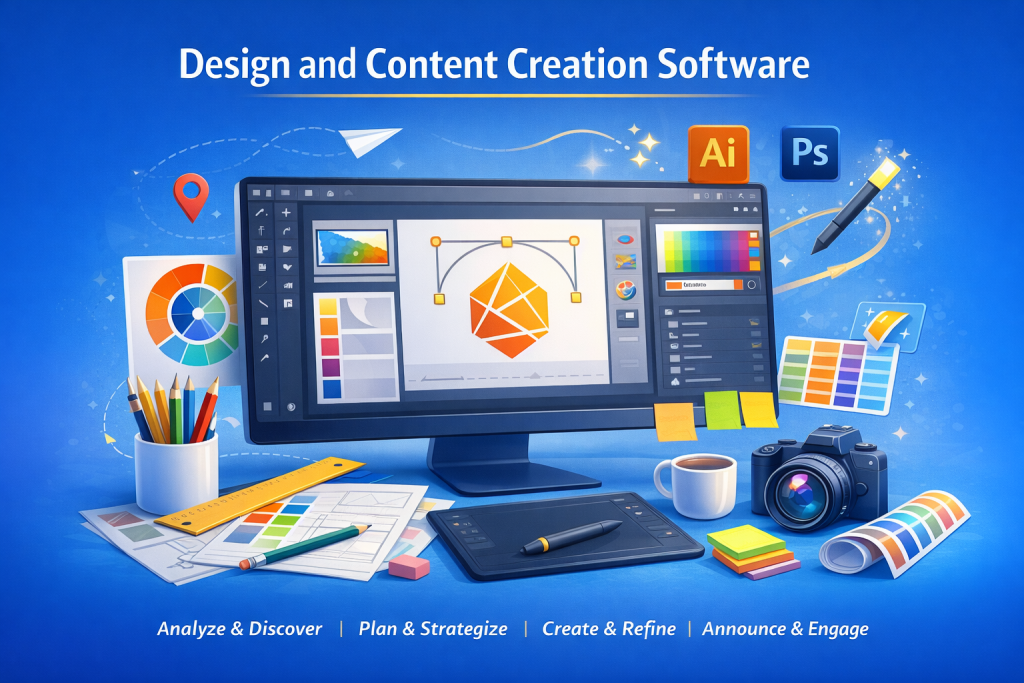
At the heart of any rebrand is creation. New logos, typography systems, visual elements, imagery styles, and brand expressions all start here.
The tools your team uses during this phase influence not only how the brand looks, but how easily it can be maintained later.
Creating the Core Brand Assets
Design and content creation software supports the development of foundational assets such as logos, brand marks, layouts, illustrations, motion assets, and photography treatments.
Maintaining Quality and Consistency
When teams use inconsistent or outdated tools, quality gaps appear quickly. Strong creation software ensures precision, scalability, and repeatability.
Example Use Case
A marketing team uses professional design tools to build a flexible visual system during a rebrand. That system becomes the reference for all future campaigns.
7. Design Template and Automation Tools
Once the rebrand launches, demand for content increases rapidly. Teams need to produce assets without relying on designers for every request.
Design template tools bridge that gap.
Empowering Non Designers
Templates allow non designers to create on brand materials safely. Layouts, fonts, colors, and spacing are locked in.
Speed Without Sacrificing Consistency
Automation enables faster execution while preserving brand integrity.
Example Use Case
After a rebrand, a company creates a library of branded templates for presentations and social media, enabling teams to move faster without brand drift.
8. Campaign Planning and Launch Tools
A rebrand launch is not a single moment. It is a coordinated sequence of communications. Campaign planning tools help brands control that narrative.
Structuring the Rebrand Rollout
Phased rollouts build understanding and anticipation rather than confusion.
Coordinating Channels and Messaging
Campaign tools ensure alignment across web, email, social, advertising, and internal communication.
Example Use Case
A brand schedules internal announcements first, followed by customer facing and external campaigns, creating a smooth transition.
9. Analytics and Brand Performance Tools
A rebrand is only successful if it delivers measurable impact. Analytics tools provide the feedback loop needed to improve performance.
Tracking Brand Sentiment and Adoption
Social listening reveals how audiences respond to the new identity.
Measuring Business Impact
Analytics connect brand changes to engagement, conversion, and growth metrics.
Example Use Case
Post launch data highlights messaging gaps, allowing teams to refine communication without revisiting the entire rebrand.
10. Modular Brand Management Suites
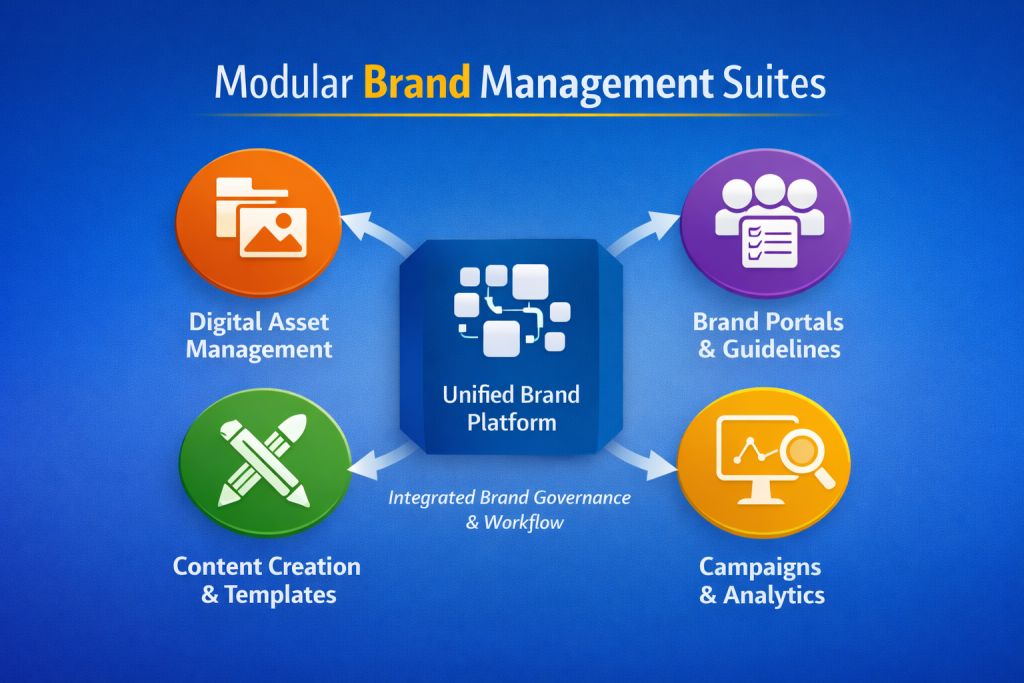
As brands mature, managing disconnected tools becomes a risk. Modular brand management suites bring critical capabilities together.
Why Tool Sprawl Creates Risk
Disconnected systems weaken governance and create inconsistency.
The Value of Unified Brand Infrastructure
Modular suites combine asset management, brand governance, collaboration, and activation in one ecosystem.
Example Use Case
A growing company consolidates tools into a single brand platform, simplifying operations and improving brand control.
How to Choose the Right Rebranding Tool Stack
Not every organization needs every tool at once. The key is prioritization.
Start With Governance First
Asset control and brand clarity should come before speed. Without governance, scale amplifies mistakes.
Choose Tools That Scale With Growth
A rebrand is not static. Choose systems that evolve as your brand expands into new markets and channels.
Think Beyond Launch Day
The real challenge of rebranding begins after launch. Tools should support long term brand management, not just short term execution.
Final Thoughts Making Your Rebrand Stick
Rebranding is one of the most demanding initiatives a brand can undertake. Creativity matters, but structure matters more. Without the right tools, even the strongest vision fades under operational pressure.
The technologies outlined here help teams move with confidence. They reduce friction, protect consistency, and allow brands to grow without losing their identity. When systems support strategy, rebrands stop being fragile moments and become durable foundations.
Choosing the right tools does not just help you launch a new brand. It helps you keep it strong, relevant, and trusted long after the excitement fades.