Hiring today is no longer just about filling open roles. It is about convincing people that your company is worth their time, trust, and long term commitment. Skilled professionals now research employers just as carefully as companies screen candidates. They read reviews, study your culture, explore your values, and compare your workplace promises with real employee experiences. In this environment, salary alone is no longer enough to win talent.
This is where your employee value proposition becomes your strongest advantage. It defines what your organization truly offers its people beyond a paycheck. It shapes how potential candidates see your brand and how current employees feel about staying with you. A strong employee value proposition helps you attract better talent, reduce hiring costs, improve engagement, and build long term loyalty.
In this guide, you will learn exactly how to create an employee value proposition that feels authentic, strategic, and scalable. We will break down every core element, walk you through the creation process, highlight common mistakes, and show how the right systems can help you manage and communicate your EVP with clarity and consistency.
What Is an Employee Value Proposition
An employee value proposition is the complete experience a company offers to its employees in exchange for their skills, time, and commitment. It goes far beyond salary and job titles. It includes your culture, growth opportunities, leadership style, work environment, benefits, flexibility, and the sense of purpose people feel when they work with you.
In simple terms, your employee value proposition answers one powerful question for every candidate and employee. Why should I choose this company and stay here long term? The answer to that question is shaped by everything employees see, feel, and experience every day.
A strong employee value proposition is not what you claim on a careers page. It is what your employees consistently experience in their daily work. When your EVP is authentic and well defined, it builds trust, attracts people who truly fit your culture, and reduces early attrition. When it is weak or unclear, even the best recruitment campaigns struggle to deliver quality hires.
Why Every Growing Company Needs a Strong EVP Today
The way people choose where to work has changed dramatically. Today, talented professionals do not settle for the first offer they receive. They compare companies, study leadership culture, review growth opportunities, and closely examine how employees are treated. This shift has made the employee value proposition a critical part of business success, not just an HR initiative.
A strong EVP gives companies a clear competitive edge in the hiring market. It reduces the time and cost spent on recruitment by attracting candidates who already align with what your company stands for. When expectations are clear from the start, new hires settle faster and stay longer.
Beyond hiring, a strong EVP directly improves internal engagement. Employees who feel valued, supported, and aligned with the company mission are more productive and loyal. This leads to lower turnover, stronger team morale, and better overall performance.
In a market where reputation travels fast through reviews and social media, your EVP also protects your employer brand. It ensures that what you promise publicly matches what employees experience privately.
The Real Difference Between Employer Brand and Employee Value Proposition
Employer brand and employee value proposition are often used interchangeably, but they serve different purposes inside an organization. Your employer brand is how the outside world perceives you as a place to work. It is shaped by career pages, social media, reviews, and word of mouth. It influences whether people feel curious enough to apply.
Your employee value proposition, on the other hand, is the foundation behind that image. It defines the real experience employees receive once they join. It shapes how leaders behave, how teams collaborate, how growth is supported, and how people feel at work each day.
In simple terms, your employer brand is the message you share with the market, while your EVP is the reality you build inside the company. When both are aligned, you attract the right talent and retain them longer. When they are misaligned, trust breaks quickly and turnover rises.
Core Building Blocks of a High Impact EVP
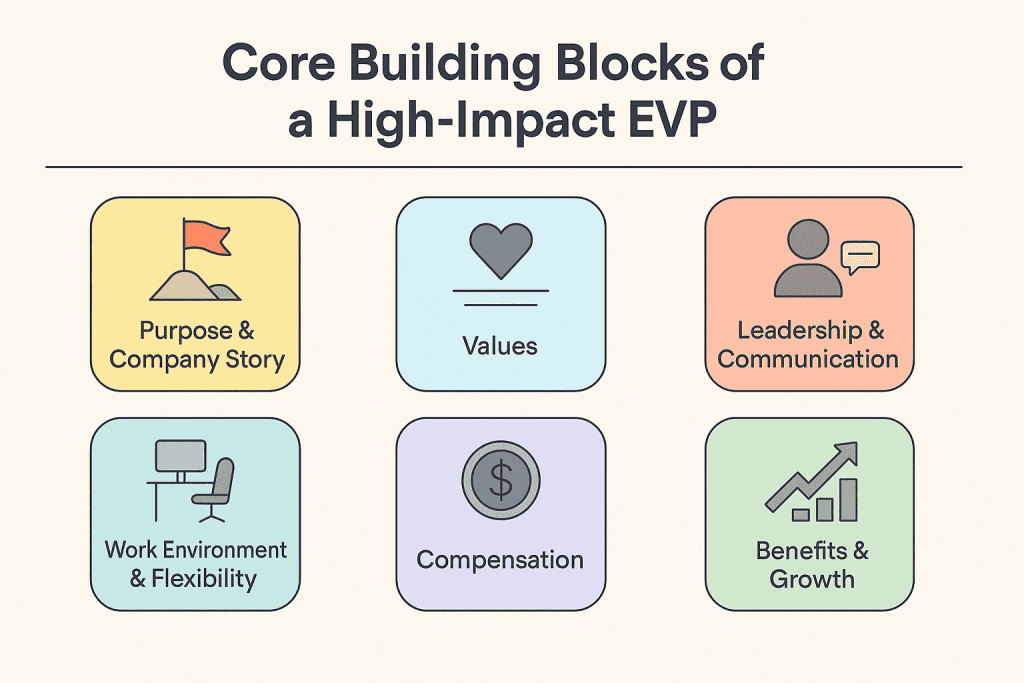
A strong employee value proposition is never built on one single benefit. It is shaped by multiple layers of experience that employees feel every day. These building blocks work together to define how your company supports growth, communicates expectations, rewards effort, and creates a sense of belonging. When all these elements are intentionally designed and consistently delivered, your EVP becomes clear, believable, and powerful.
Below are the essential pillars that form the foundation of a high impact employee value proposition.
Purpose and Company Story
Every company has a journey, and that journey becomes a powerful part of its employee value proposition. Your purpose and company story explain why your organization exists beyond generating revenue. Employees want to feel that their work has meaning and impact. When they understand the purpose behind what they do, motivation and loyalty increase naturally.
Your story also creates emotional connection. It shows how the business started, what challenges it overcame, and where it is heading. This sense of direction helps employees feel part of something larger than their job title. A clear purpose gives people a reason to stay during difficult phases and a reason to grow with the brand long term.
Values That Employees Experience in Daily Work
Company values only become meaningful when employees see them reflected in daily decisions and behavior. These values shape how leaders treat teams, how conflicts are resolved, and how success is defined inside the organization. When values are lived consistently, they create trust and clarity.
Employees look for alignment between what a company claims and what it practices. If values support fairness, growth, transparency, and respect, people feel safer and more motivated at work. Strong values also help attract candidates who naturally fit your culture. This reduces friction during onboarding and builds stronger long term relationships across teams.
Leadership and Communication Culture
Leadership style plays a major role in shaping the employee experience. Open communication builds confidence, while unclear or inconsistent communication creates uncertainty and disengagement. Employees want to feel informed, supported, and heard.
A healthy communication culture encourages regular feedback, honest conversations, and shared decision making. When leaders actively listen and communicate with clarity, teams feel respected and empowered. This sense of psychological safety allows employees to take initiative, share ideas freely, and grow in their roles without fear. Over time, strong leadership communication becomes one of the most defining strengths of an effective employee value proposition.
Work Environment and Flexibility
The work environment directly affects how employees experience their day to day responsibilities. This includes physical spaces, remote or hybrid options, schedules, and overall flexibility. People now value balance and autonomy as much as stability.
A positive environment allows employees to focus without constant stress or exhaustion. Flexibility supports personal responsibilities, health, and long term sustainability at work. When employees feel trusted to manage their time and output, productivity rises naturally. A supportive environment also strengthens collaboration and reduces burnout, making it an important pillar of a modern and attractive employee value proposition.
Compensation Structure and Financial Security
Fair and competitive compensation remains a core part of every employee value proposition. Employees expect their effort, skills, and performance to be rewarded in a way that allows them to live comfortably and plan their future with confidence.
A transparent compensation structure builds trust. It shows that growth and performance are recognized and rewarded consistently. Financial security reduces stress and allows employees to focus on contributing their best work. While compensation alone does not define satisfaction, it plays a crucial role in attracting talent and retaining high performers over the long term.
Benefits That Truly Improve Employee Life
Benefits extend far beyond insurance plans and paid leave. They represent how a company supports employees outside of their core job responsibilities. Wellness programs, learning budgets, family support, and mental health resources all contribute to overall employee well being.
When benefits align with real employee needs, they increase satisfaction and loyalty. Employees feel seen as people, not just workers. Thoughtfully designed benefits also demonstrate that the company is invested in long term employee success, not only short term performance. This deepens trust and strengthens emotional connection with the brand.
Growth Opportunities and Career Progression
Most professionals think about where their career is headed from the very beginning. Clear growth opportunities give employees confidence that they can build a future within the organization. Training programs, mentorship, and internal mobility all support continuous development.
When employees see a clear path forward, they become more engaged and committed. They feel encouraged to improve their skills and take ownership of their performance. Career progression also helps companies retain top talent by reducing the need for employees to seek growth elsewhere. This makes long term development a powerful driver of a strong employee value proposition.
Step by Step Process to Create Your Employee Value Proposition
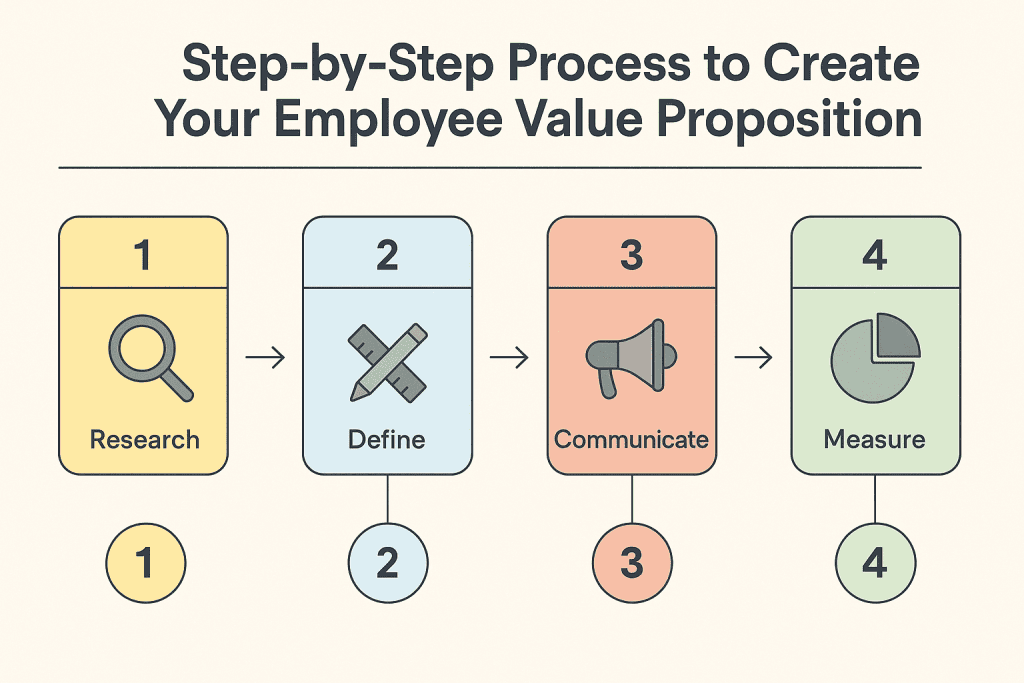
Creating a strong employee value proposition is not a one time branding exercise. It is a thoughtful process that requires listening, alignment, testing, and continuous refinement. When done correctly, it becomes a living framework that guides how your company attracts, supports, and retains talent. Below is a practical step by step process you can follow to build an EVP that reflects reality and drives long term results.
Step 1: Listen to Your Employees First
Your employees already experience your EVP every day, whether it is documented or not. Start by gathering honest feedback through surveys, interviews, and small group discussions. Ask what they value most, what frustrates them, and what makes them stay. Their answers reveal the real story behind your workplace. This step ensures your EVP is built on truth, not assumptions.
Step 2: Audit Your Current Employer Brand
Review how your company currently presents itself to the public. Study your careers page, job descriptions, reviews, and social media presence. Identify gaps between what is being promised and what employees actually experience. This audit helps you understand where alignment is strong and where credibility needs improvement.
Step 3: Define Your People Promise Clearly
Based on real insights, define what your company genuinely offers its employees. Clarify your purpose, values, growth opportunities, and support systems in simple language. Your EVP should feel specific, believable, and easy to communicate. This is the core promise that guides both recruitment and retention.
Step 4: Align Leadership and HR Teams
Leadership behavior must reflect the EVP consistently. Work closely with HR and leadership teams to ensure policies, communication, and management practices support your value proposition. When leaders live the EVP, employees trust it. When they do not, even the strongest messaging fails.
Step 5: Test and Refine Through Feedback
Once your EVP is defined, introduce it internally and observe how employees respond. Gather feedback, track engagement, and refine areas that feel unclear or unrealistic. A strong EVP evolves as your company grows. Regular review keeps it relevant and authentic.
How to Write Your EVP Statement the Right Way
Your employee value proposition statement is the verbal expression of everything your organization stands for as an employer. It should clearly communicate what employees can expect when they join your company and why your workplace is different from others. A strong EVP statement is simple, specific, and grounded in real experiences.
Start by using direct and honest language. Avoid vague phrases that could apply to any company. Instead, highlight what truly makes your culture unique. Focus on people, growth, purpose, and support rather than just titles or perks. Your EVP should feel like a promise that your organization is actively committed to keeping.
The tone of your EVP statement should feel human and confident, not promotional. It must reflect how employees actually feel at work. When written well, your EVP statement becomes a powerful tool for recruitment, onboarding, and internal alignment. It sets clear expectations and helps candidates quickly understand whether your workplace is the right fit for them.
How to Bring Your EVP to Life Across Your Organization
Defining an employee value proposition is only the first step. The real impact comes from how consistently it is lived and experienced across your organization. Your EVP should guide everyday decisions, not just sit on a careers page. Employees must be able to see and feel it through leadership actions, team culture, and workplace policies.
Start by embedding your EVP into hiring and onboarding. From the first interview to the first day at work, candidates should experience what was promised. Internal communication should also reflect your EVP through regular updates, open discussions, and transparent leadership messaging.
Performance management, learning programs, and recognition systems should align with your EVP values. When your people promise is reinforced through real behavior, trust grows naturally. Over time, this consistency strengthens your employer reputation and turns employees into genuine brand advocates who speak positively about your workplace without being asked.
Common Mistakes That Weaken Employee Value Propositions
Many companies invest time in creating an employee value proposition but fail to see results because of avoidable mistakes. One of the most common errors is copying what competitors are doing. Generic promises sound impressive on paper but create no real emotional connection with employees or candidates.
Another major mistake is overpromising and underdelivering. When the experience inside the company does not match what was communicated during hiring, trust erodes quickly and turnover rises. Employees feel misled, and negative reviews follow.
Some organizations also treat EVP as a marketing project instead of a people strategy. Without leadership involvement and operational alignment, the EVP remains superficial. Lastly, ignoring employee feedback weakens authenticity. A strong EVP must reflect real experiences, not just leadership assumptions. Avoiding these mistakes helps your employee value proposition remain credible, sustainable, and truly impactful.
How Technology Helps You Manage and Scale Your EVP
As organizations grow, managing an employee value proposition through scattered documents and verbal communication becomes difficult. Technology plays an important role in keeping your EVP consistent, visible, and actionable across teams. Centralized platforms help store your people promise, brand values, communication guidelines, and internal culture resources in one accessible place.
With the right tools, HR teams can align job descriptions, onboarding materials, leadership communication, and learning content with the core EVP. This ensures that employees receive a unified experience at every stage of their journey. Technology also makes it easier to update your EVP as your company evolves, without losing clarity or consistency.
By using structured systems to manage your employer brand and EVP assets, companies reduce misalignment and improve trust. This creates a scalable foundation for long term talent growth while keeping the employee experience authentic and transparent.
Future Trends Shaping Employee Value Propositions
Employee expectations continue to evolve as work culture, technology, and personal priorities change. One of the strongest trends shaping modern employee value propositions is the demand for flexibility. Remote work, hybrid structures, and outcome based performance models are becoming standard across industries.
Purpose driven work is also gaining importance. Employees want to feel connected to a larger mission and understand how their role contributes to meaningful impact. Learning and career adaptability are rising priorities as well. Continuous skill development is now viewed as a basic expectation rather than a bonus.
Mental health and wellbeing support are becoming central to EVP strategies. Companies that invest in emotional health, workload balance, and long term sustainability will lead the next era of talent retention. Transparency in leadership and communication will also remain a defining factor in how employees choose where to work.
Keep Your Employee Value Proposition Consistent Across Teams
Your employee value proposition only works when it is clearly documented, shared, and followed across every department. As teams grow, keeping your values, communication standards, and people promise aligned becomes harder without the right system in place.
Brandy helps you centralize your employer brand, EVP guidelines, onboarding assets, and internal communication standards in one secure platform. This ensures that what you promise to employees stays consistent across hiring, leadership, and daily operations.
If you want to scale your EVP with clarity and confidence, explore how Brandy can support your people and brand strategy.
Final Thoughts
Creating an employee value proposition is not about crafting the perfect message for hiring campaigns. It is about shaping a real experience that employees can trust, grow with, and feel proud to represent. A strong EVP brings clarity to what your organization stands for, how it supports its people, and why staying with your company makes sense both professionally and personally.
When your employee value proposition is built on authentic feedback, aligned leadership, and consistent delivery, it becomes a powerful driver of long term hiring success and employee loyalty. It attracts people who truly fit your culture and helps retain those who contribute most to your growth. Over time, a well defined EVP becomes one of the strongest competitive advantages any organization can build.